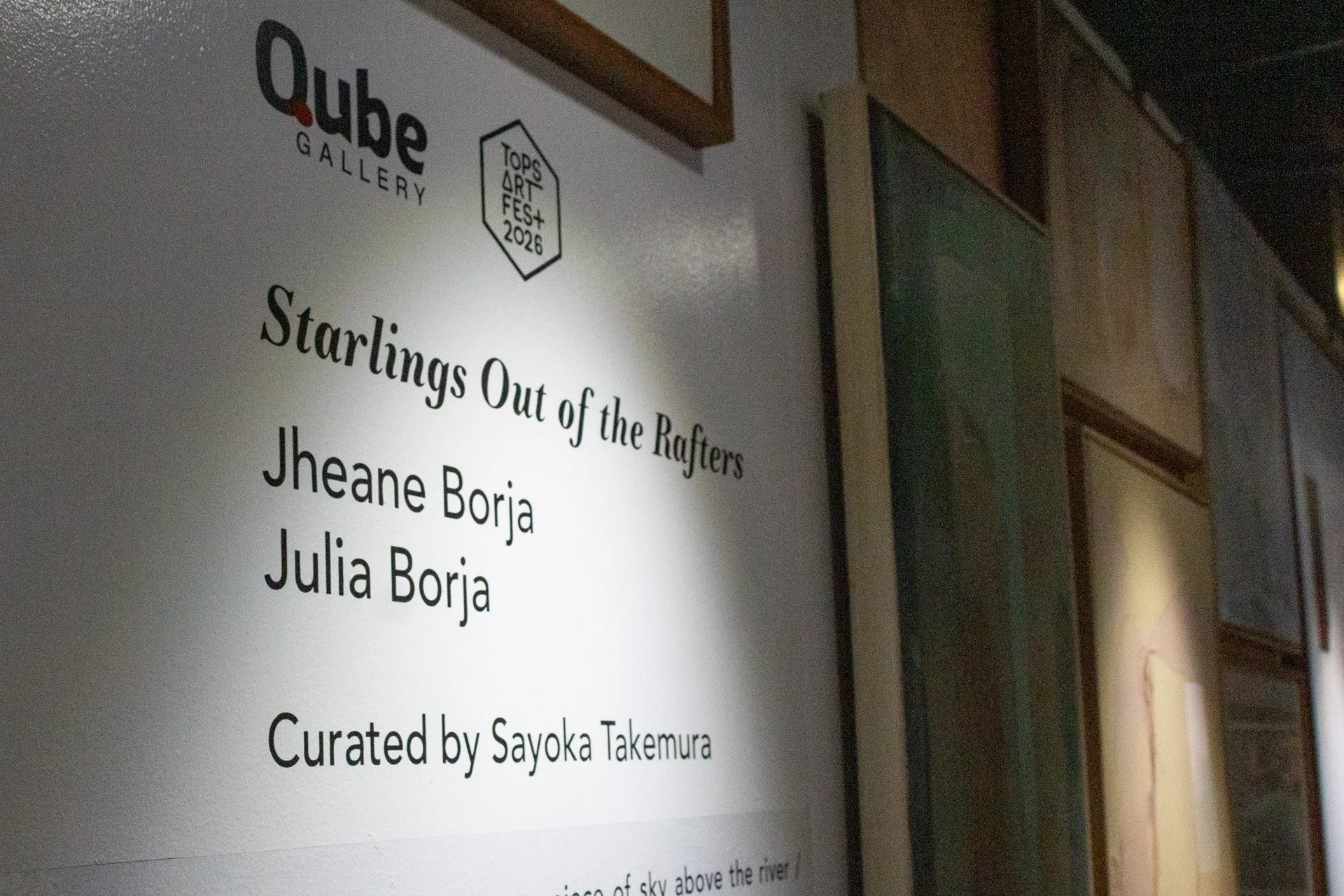
TOPS Art Fest 2026
22 - 25 October 2026 Booth L13, TOPS, Busay, Cebu City
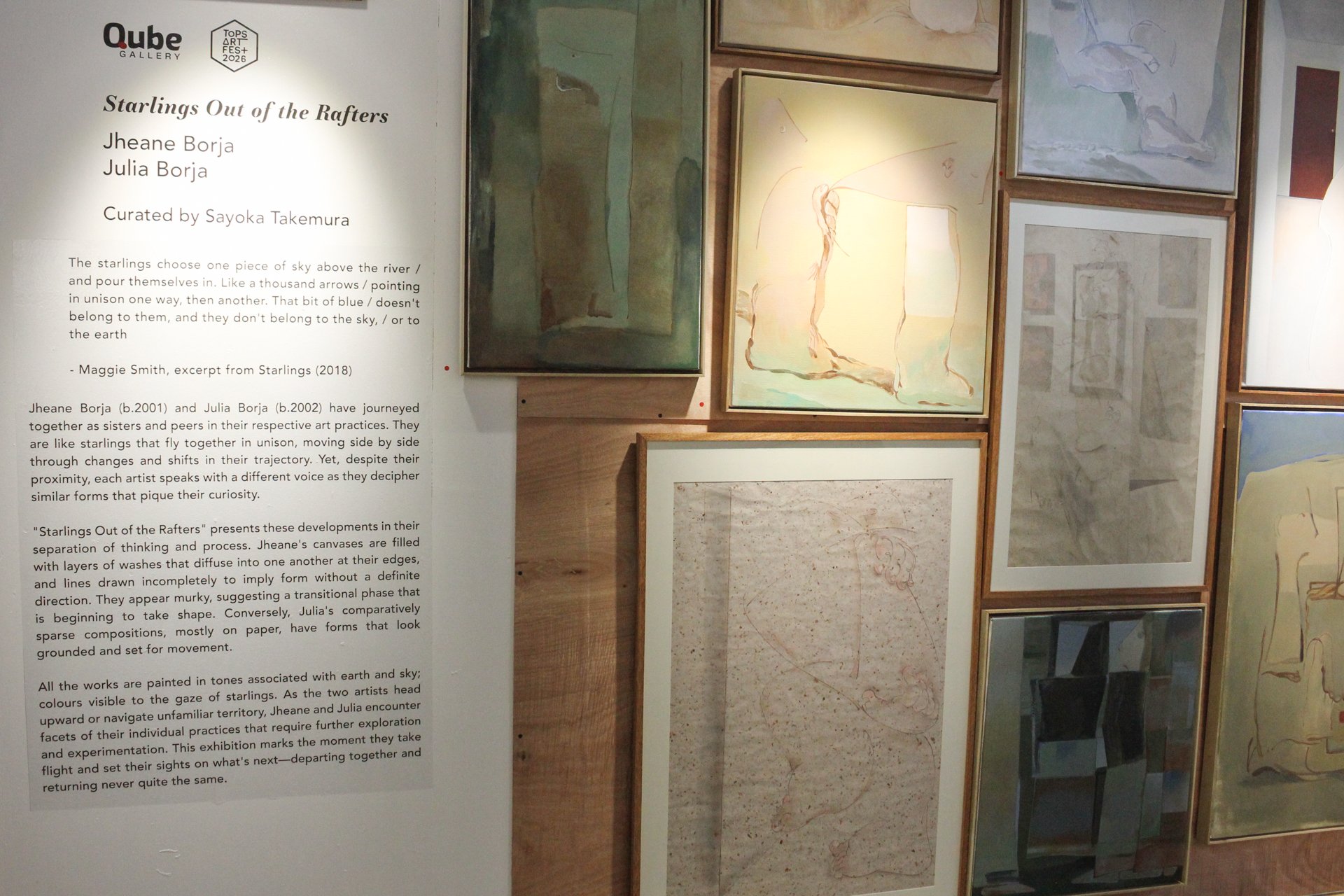
Jheane Borja and Julia Borja
Curated by Sayoka Takemura
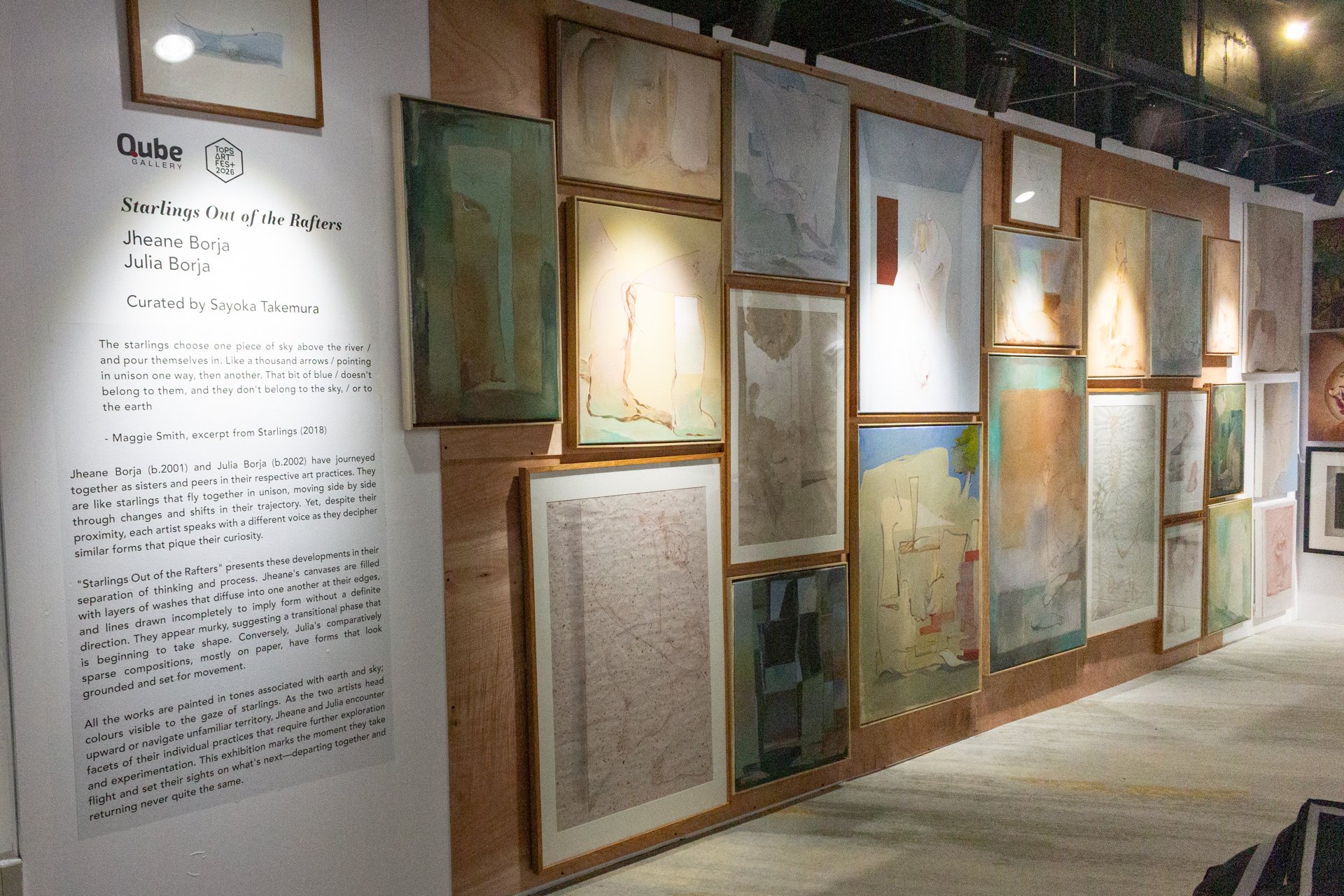
The starlings choose one piece of sky above the river / and pour themselves in. Like a thousand arrows / pointing in unison one way, then another. That bit of blue / doesn't belong to them, and they don't belong to the sky, / or to the earth. Isn't that what you've been taught—nothing is ours? (Smith, 2018, lines 1 - 5)
Jheane Borja (b. 2001) and Julia Borja (b. 2002) have journeyed together as sisters and peers in their respective art practices. They are like starlings that fly together in unison, moving side by side through changes and shifts in their trajectory. Yet, despite their proximity, each artist speaks with a different voice as they decipher similar forms that pique their curiosity.
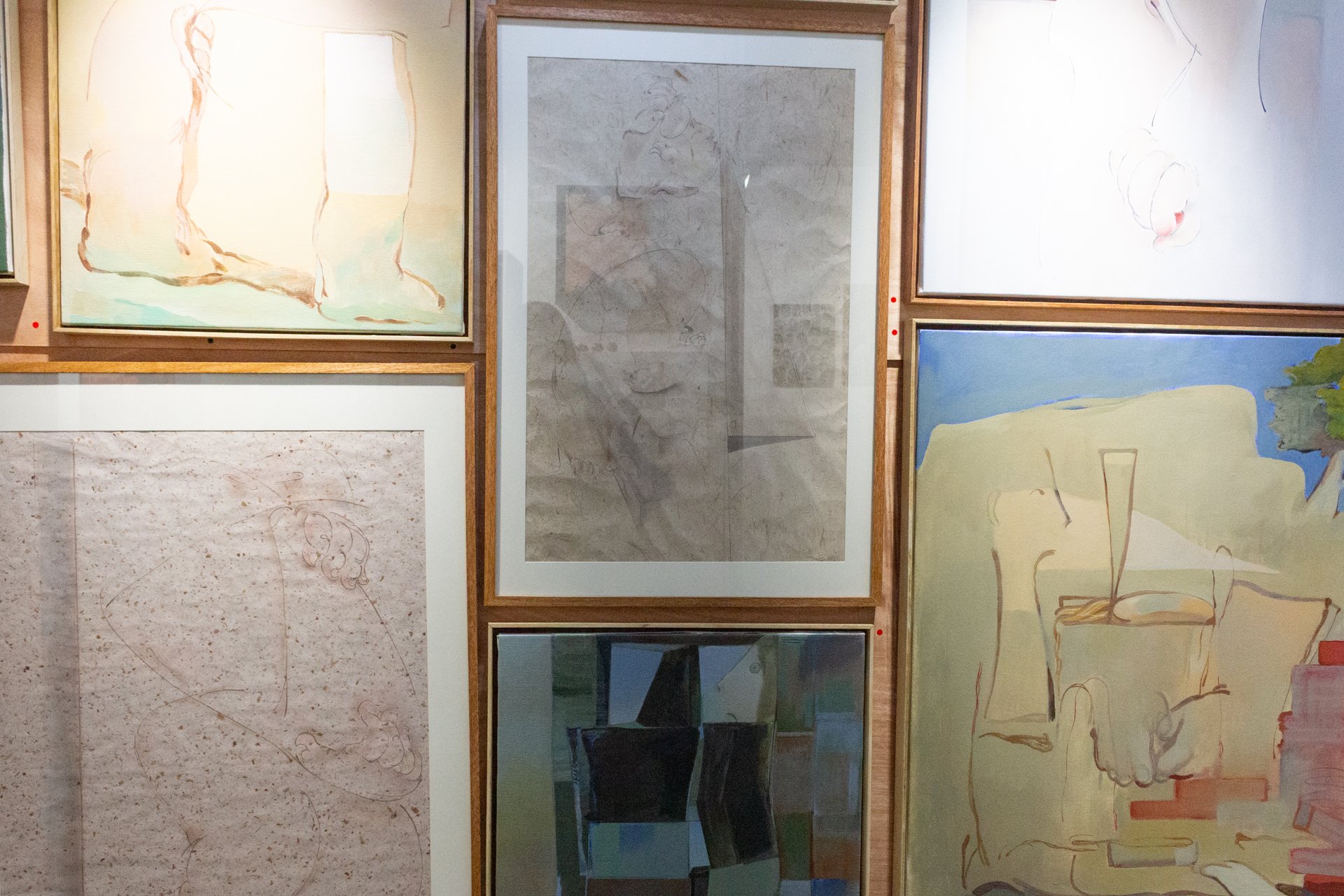
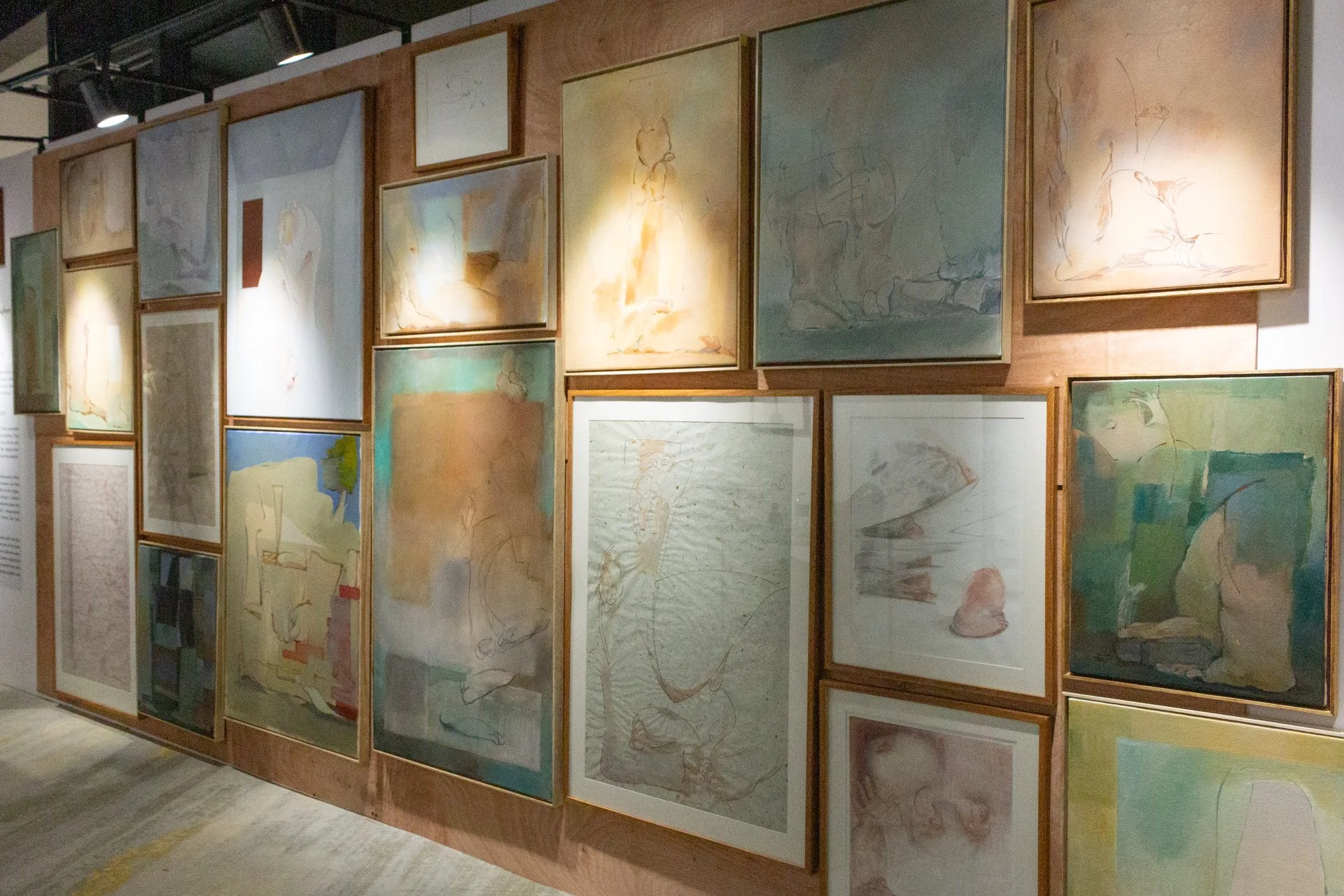
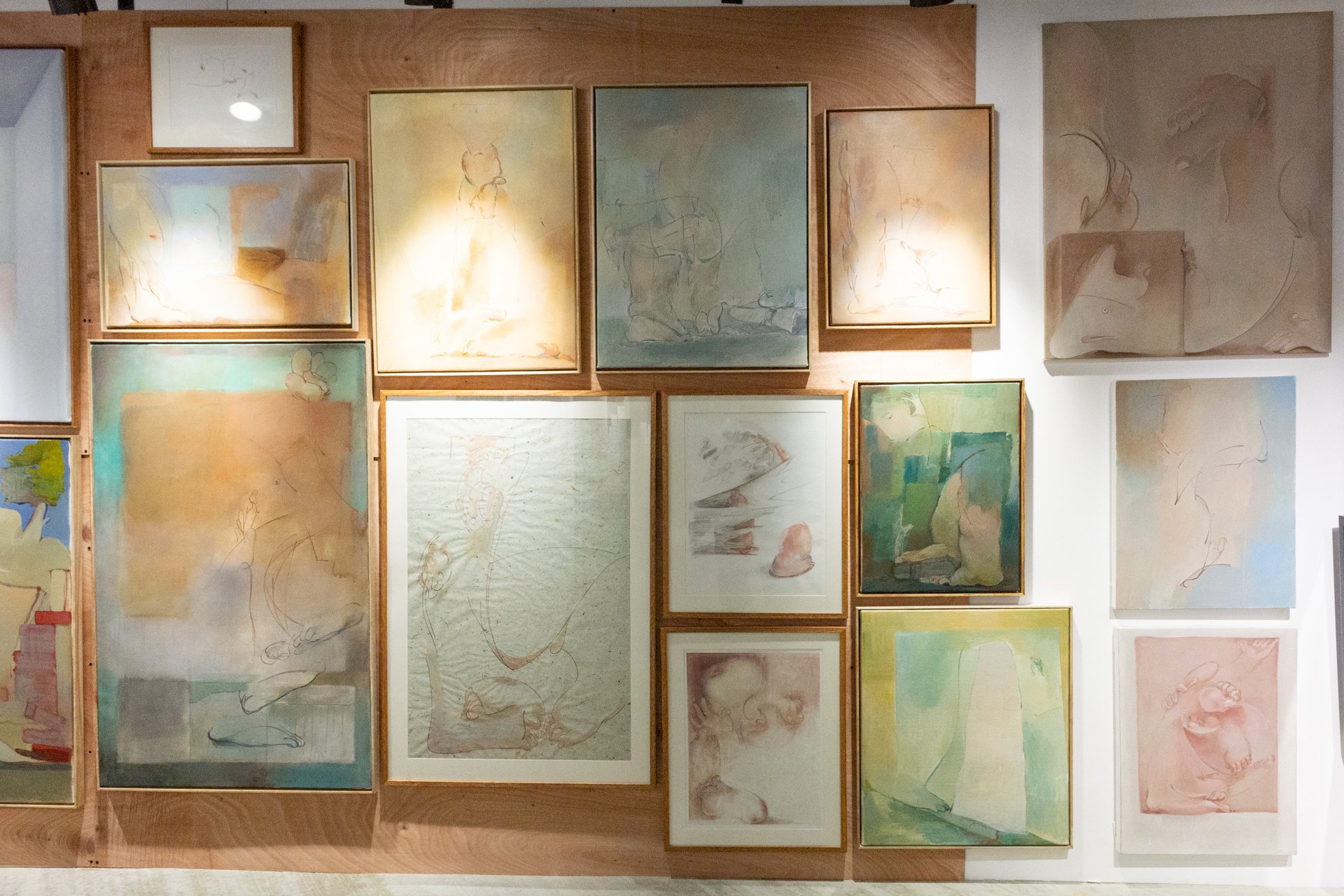
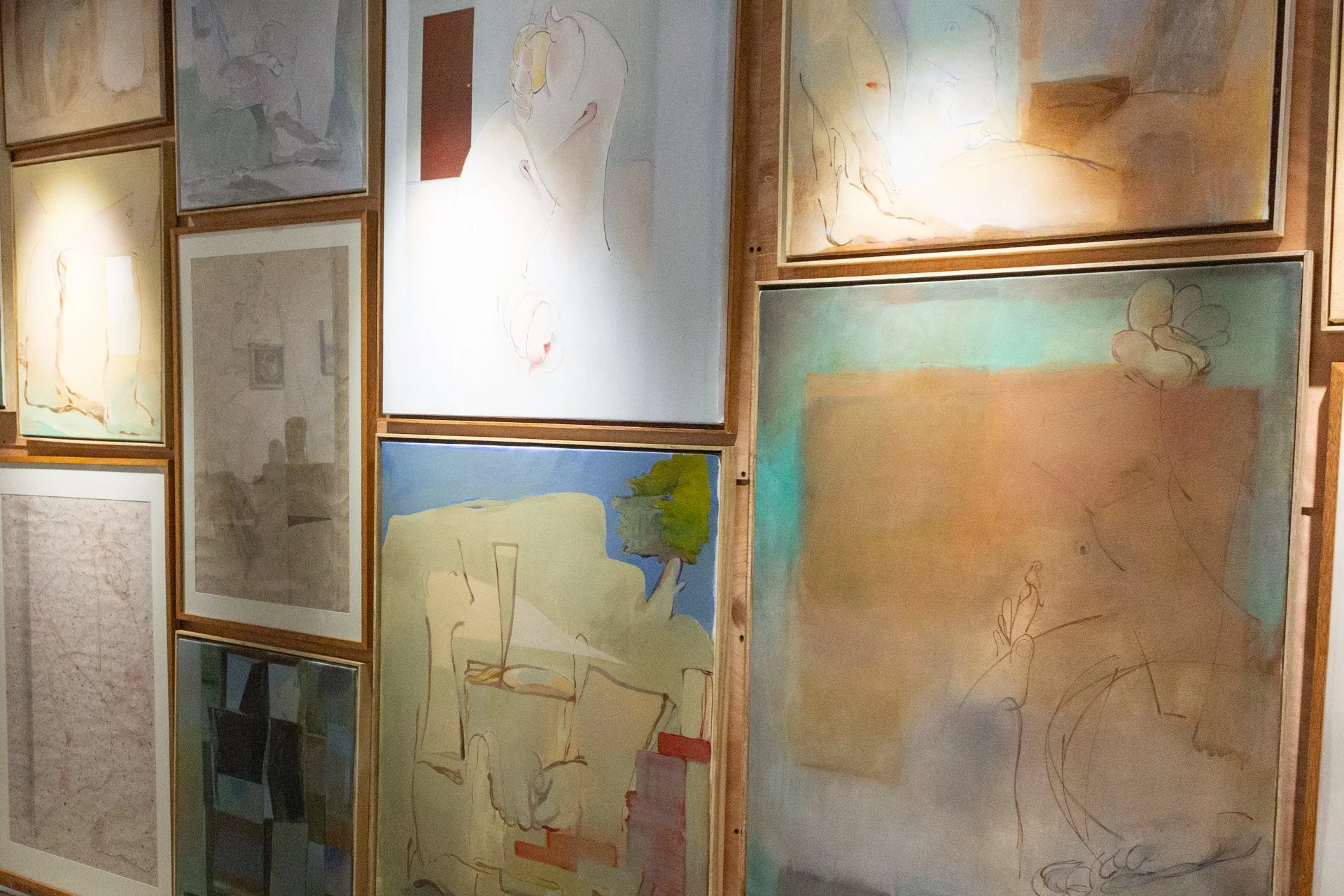
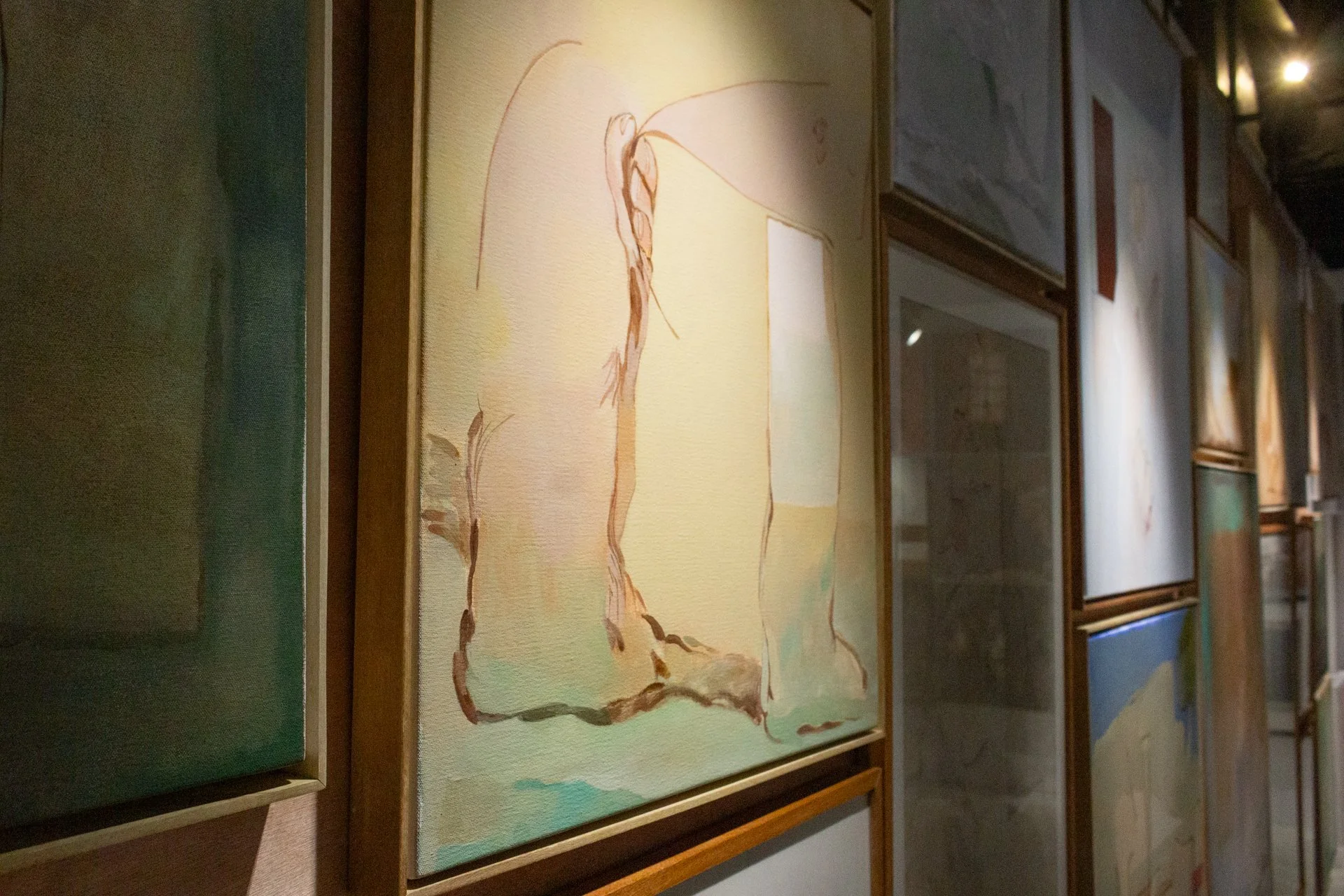
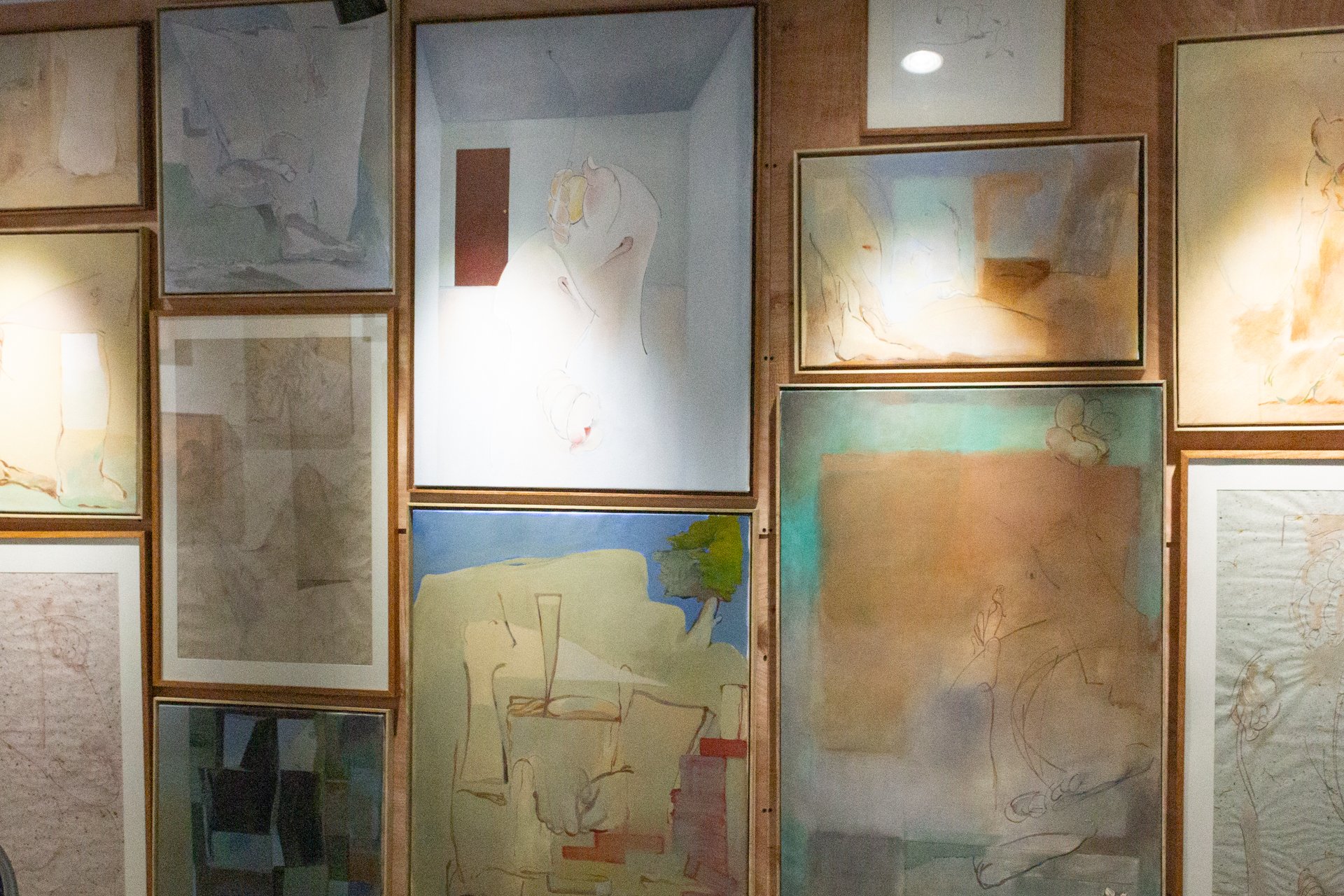
"Starlings Out of the Rafters" presents these developments in their separation of thinking and process. Jheane's canvases are filled with layers of washes that diffuse into one another at their edges, and lines drawn incompletely to imply form without a definite direction. They appear murky, suggesting a transitional phase that is beginning to take shape. Conversely, Julia's comparatively sparse compositions, mostly on paper, have forms that look grounded and set for movement.
Jheane begins with "HillBilly," a painting that initiates the connection to the environment. The central figure sits alongside a structure, surrounded by opaque strokes of green and blue that arch over them, with a tree jutting outward and directing the gaze beyond the framed image. Overall, it evokes wonder and brings to the surface the questions that arise when embarking on new ground. Uncertainty emerges through the snugly situated subject and objects beneath what appears to be a landscape that has yet to reveal its details. "Pond Scum" reiterates this absence of clarity. The contrasting tones of colour build the form with eyes subtly looking diagonally downward in hesitation, like the washes of paint that fill the canvas.
Julia, by contrast, focuses on translating motion onto flat surfaces predominantly using actual lines to show it. Colour is secondary, leaving negative space for implied movement to take place in the frame and be felt by the viewer. "Landscaping" demonstrates this intentionality and confidence. The composition has both jagged and curved marks on the left-hand side as though fighting to occupy a limited area, and the right-hand side is left empty. Additionally, the bottom half of the background and the lower limbs direct weight downward through repeated heavy-handed strokes, while the hands in the top half—free from visual noise—tug upward. These choices create tension or a push and pull in finding balance, without needing to take up the entirety of the surface. Unlike Jheane, the focus is less on dwelling in the feeling and expanding it, and more on making room for momentum to take charge.
All the works in the exhibition are painted in tones associated with earth and sky: fleeting, impermanent colours visible to the gaze of starlings. As the two artists head upward or navigate unfamiliar territory, Jheane and Julie encounter facets of their individual practices that require further exploration and experimentation. "Starlings Out of the Rafters" marks the moment they take flight and set their sights on what's next—departing together and returning never quite the same.
Smith, M. (2018). Starlings. The Southern Review, (Summer 2018), 427.