


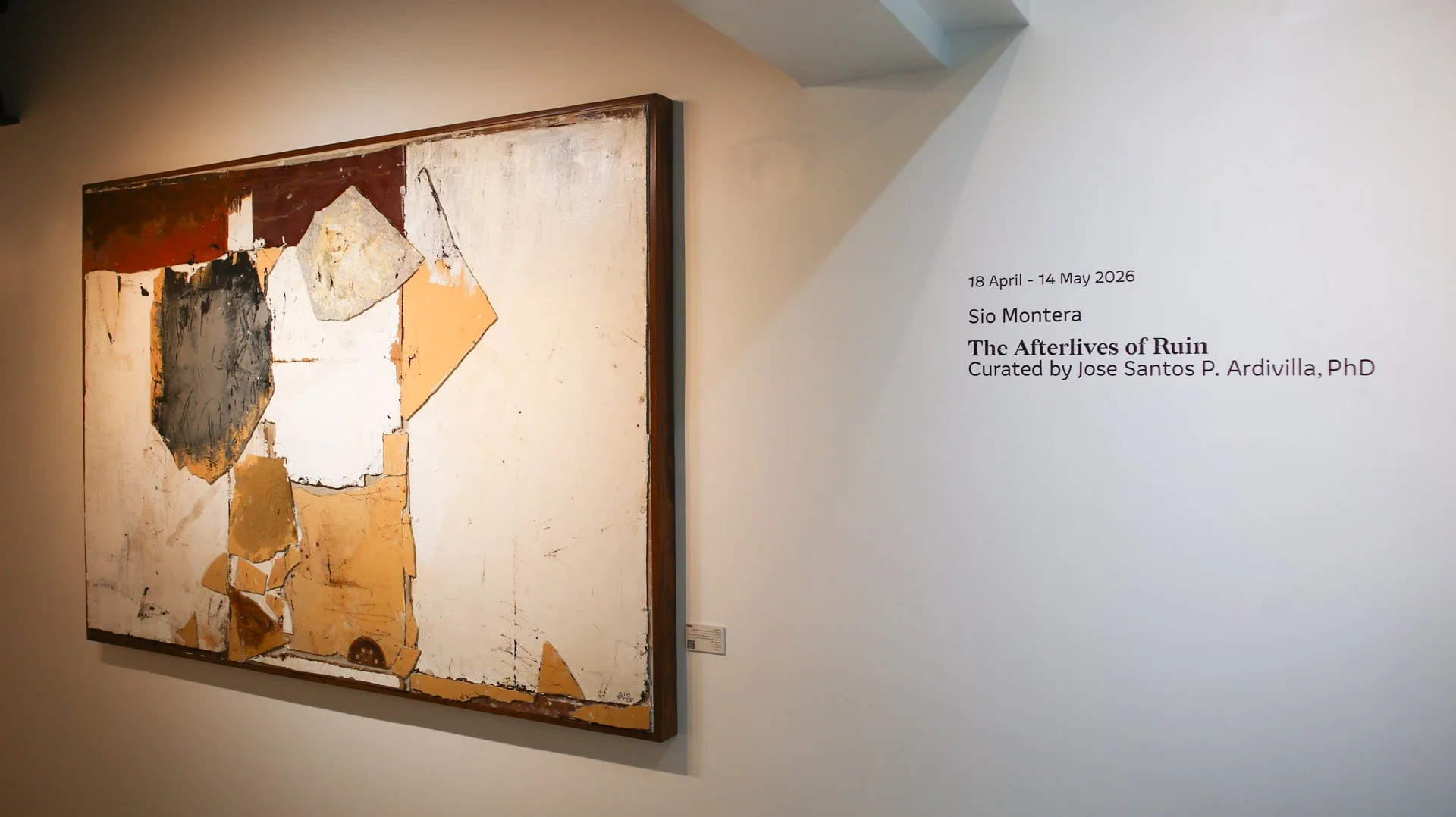
The Afterlives of Ruin
18 April - 15 May 2026
Sio Montera
Curated by Jose Santos P. Ardivilla, PhD
This exhibition unsettles that definition. In Sio Montera’s works, resilience is not submission but refusal: a refusal to be erased, diminished, or discarded. Catastrophe provides the ground, but the aftermath is where something else emerges—forms that insist on presence, memory, and resistance.
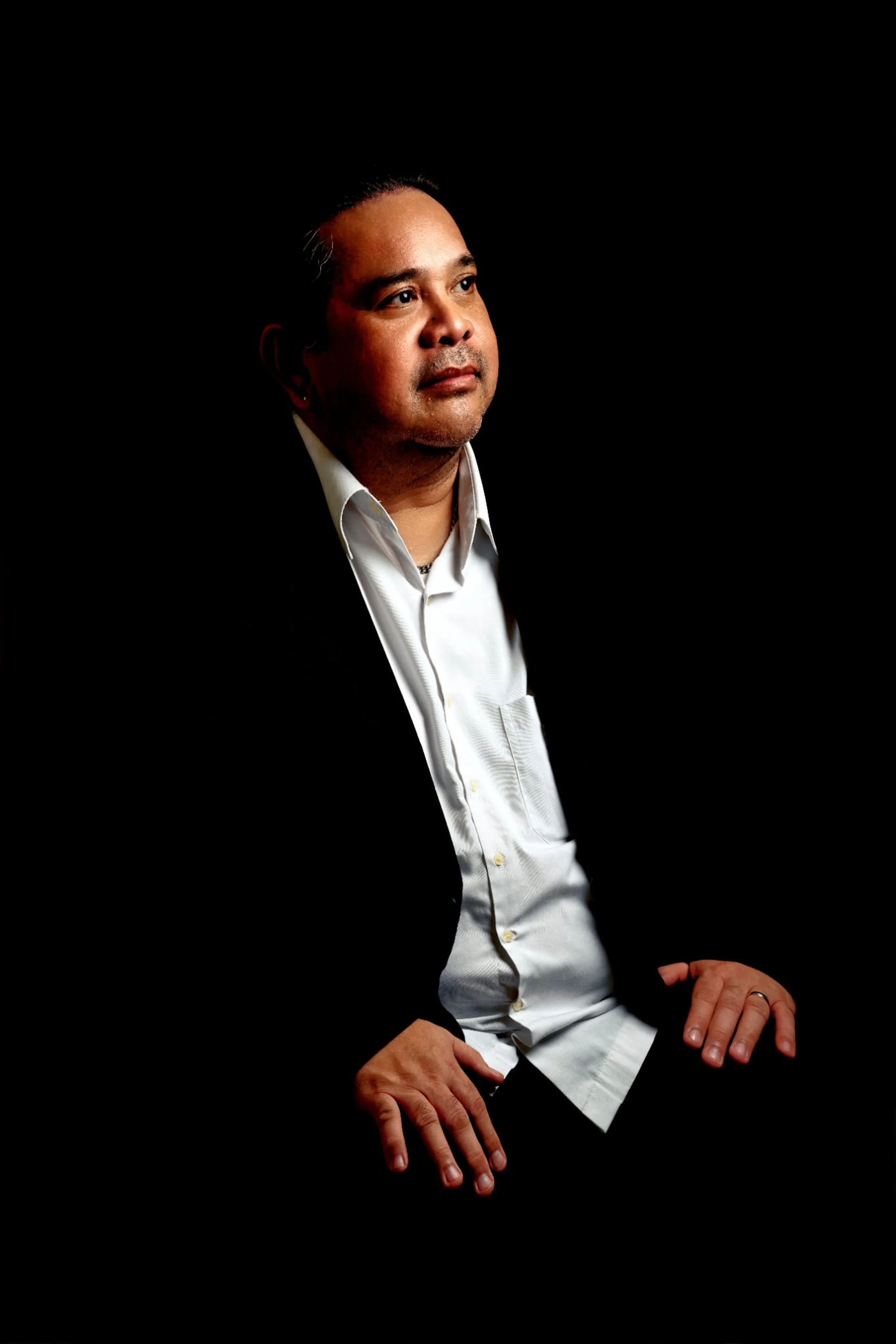
About the artist
Dennis “Sio” Montera is a Cebu-based multidisciplinary artist, educator, and cultural advocate who holds degrees from the College of Fine Arts, University of the Philippines in Diliman and a Ph.D. in Creative Industries Design from National Cheng Kung University, Taiwan. He creates textured, immersive abstract works that emerge through layering, rupture, and persistent material exploration. His practice investigates how color, gesture, and surface can carry emotional and lived experience, moving beyond representation toward a deeply felt visual language. His art has represented the country in international biennales and earned major awards, including the GSIS Art Competition and the Philippine Art Awards. A Full Professor at UP Cebu and a recipient of the University Artist Award in UP, he is also a former Head of the NCCA National Committee on Visual Arts, advancing Philippine art practice, education, and policy.
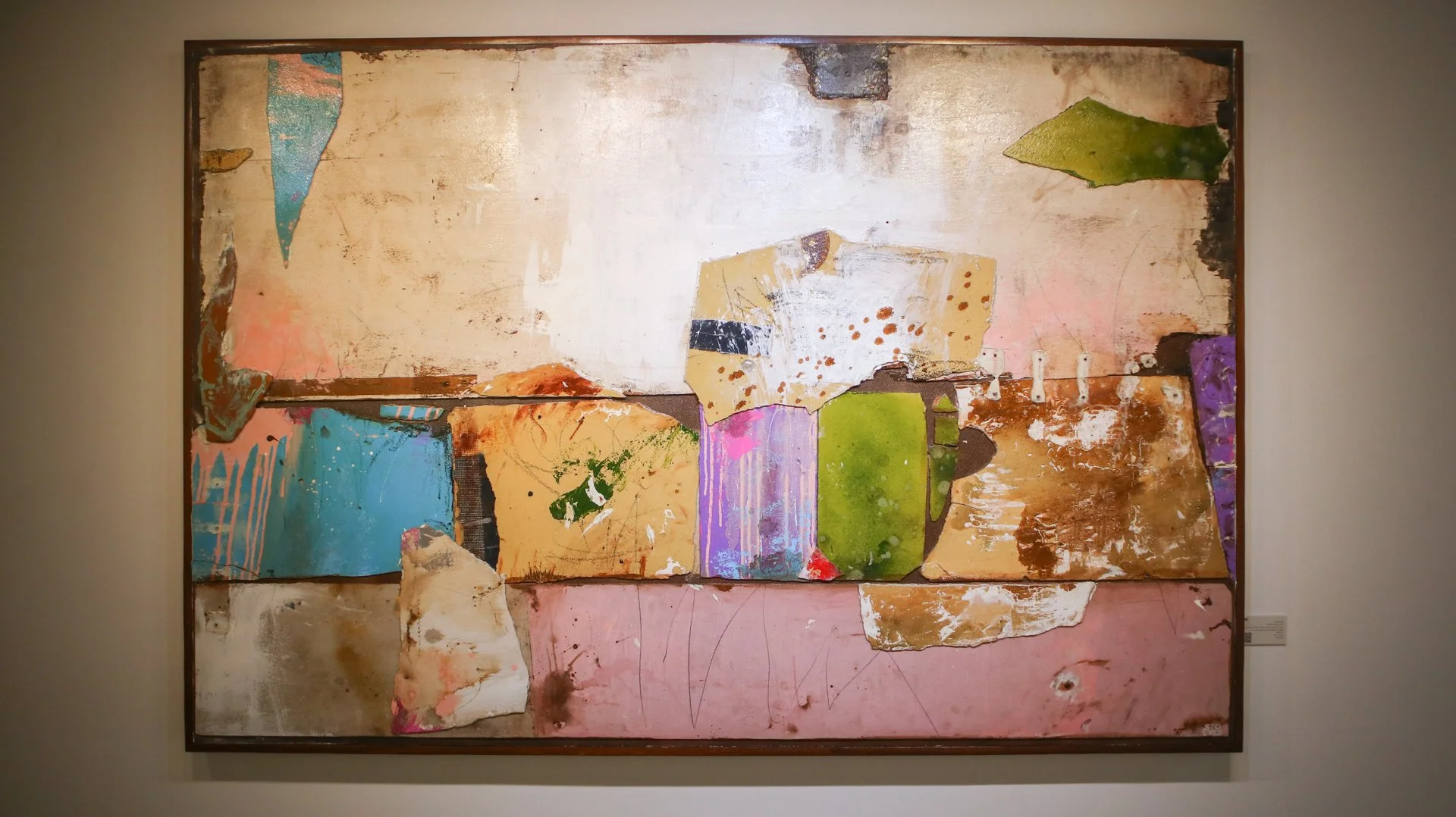
Fractured Ground, 2026
ARTIST STATEMENT
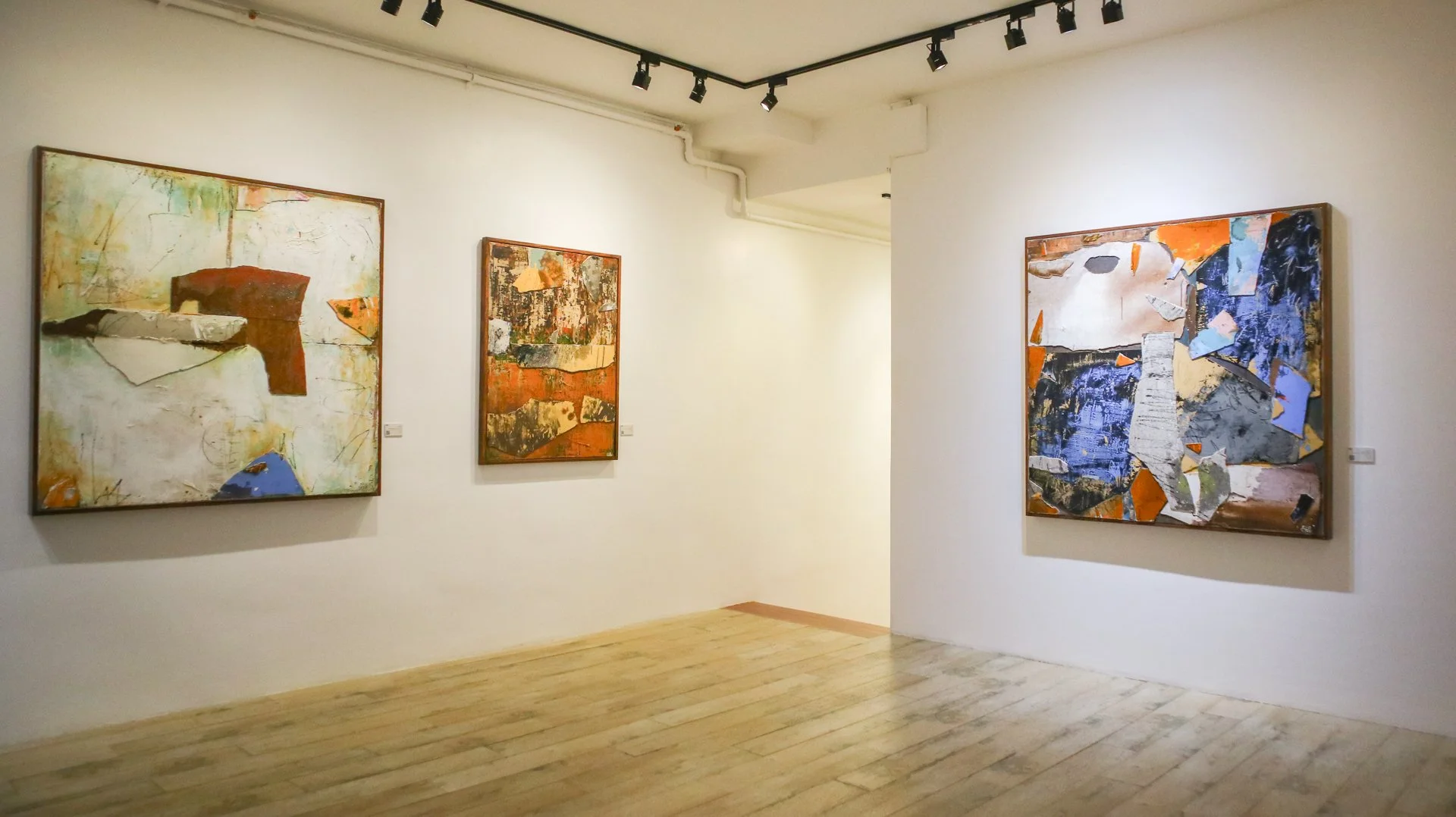
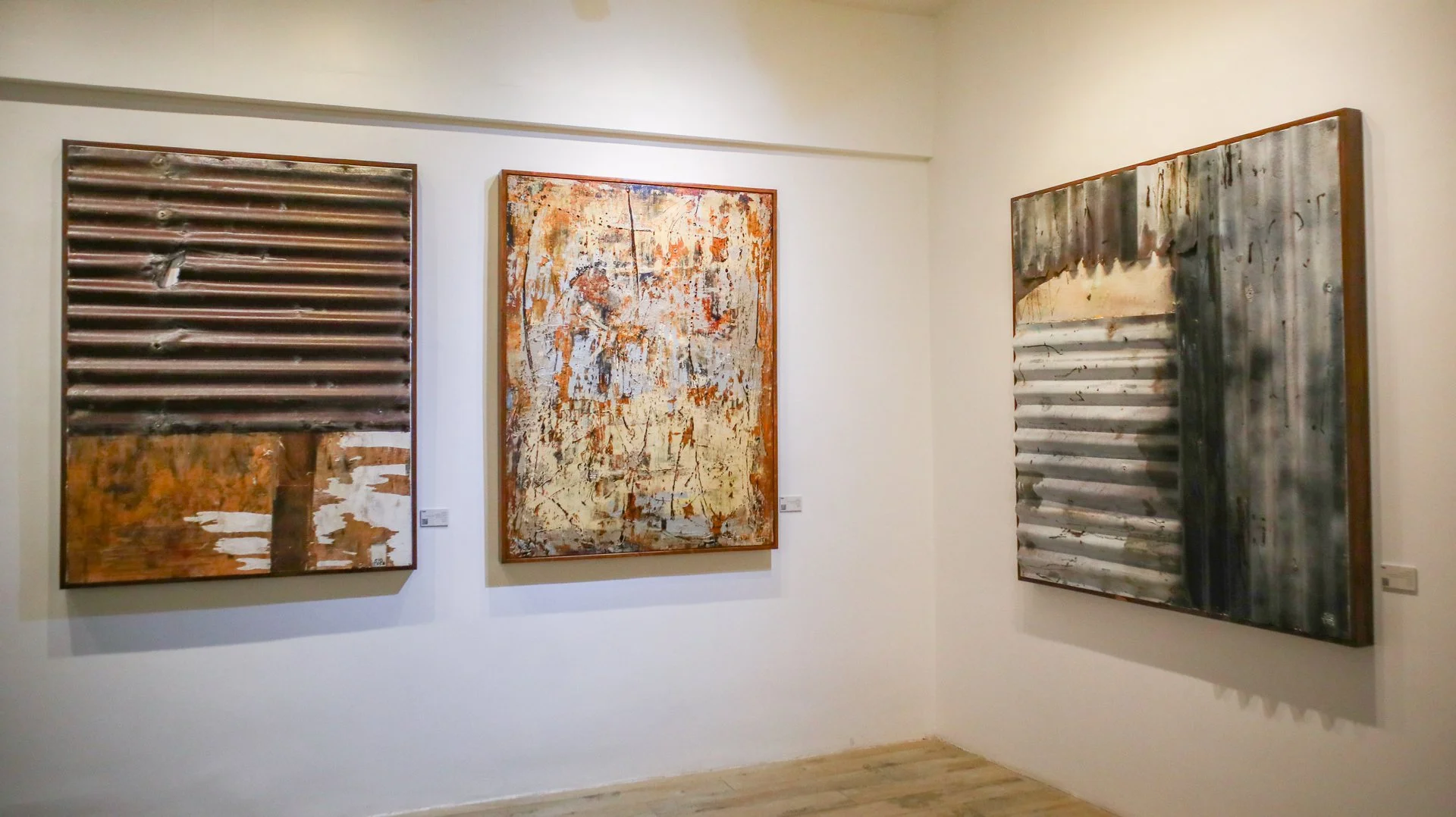
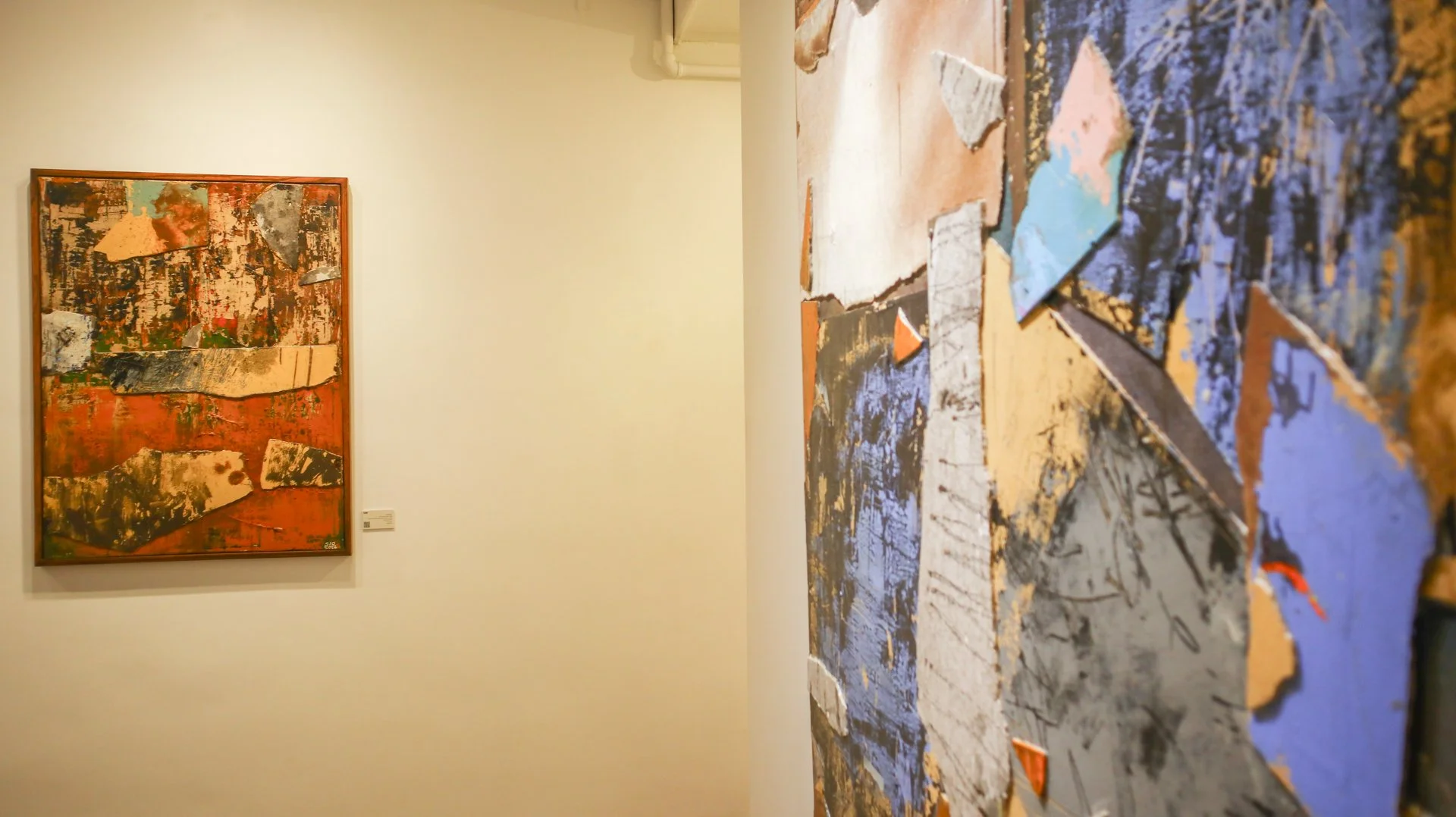
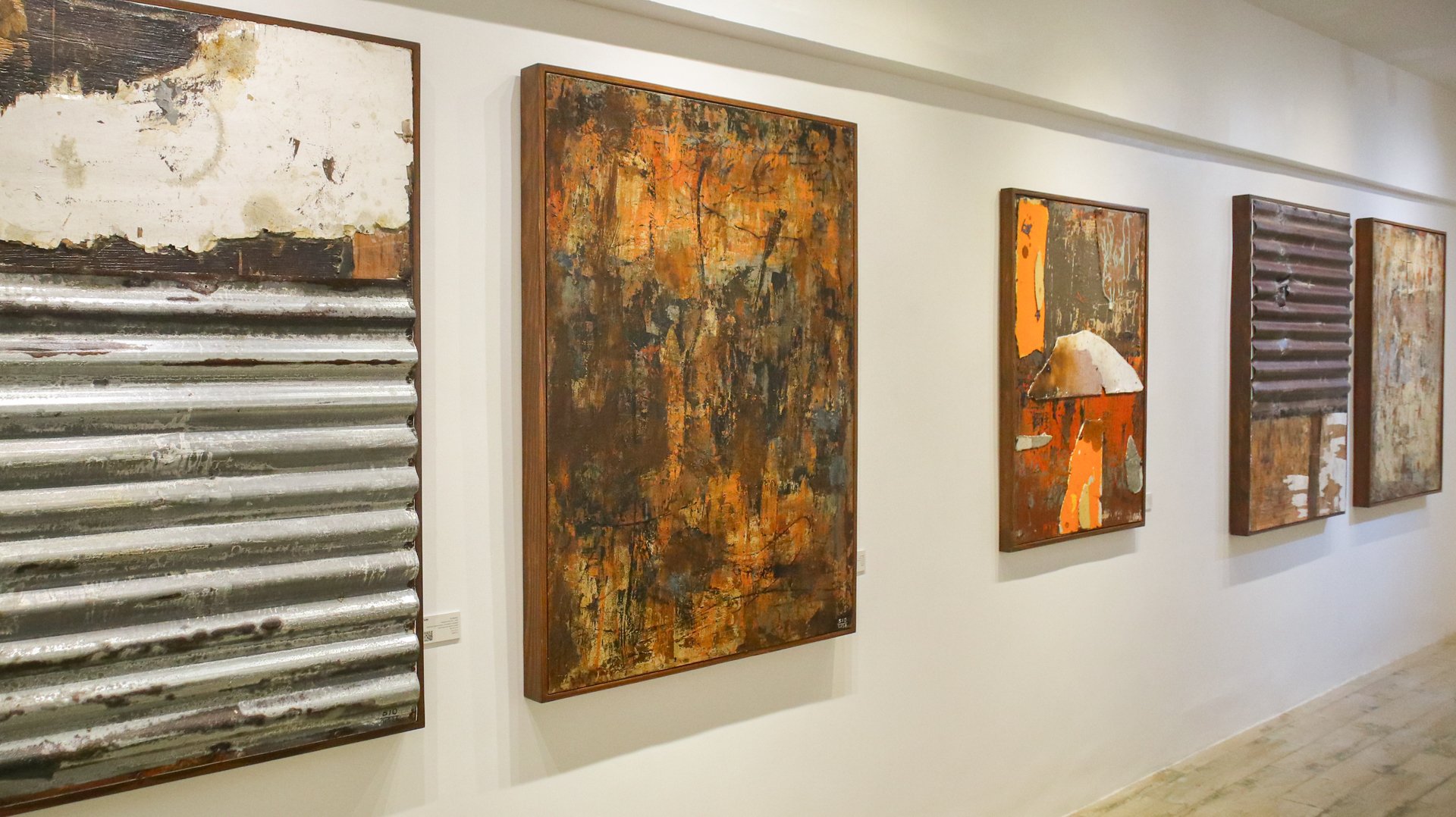
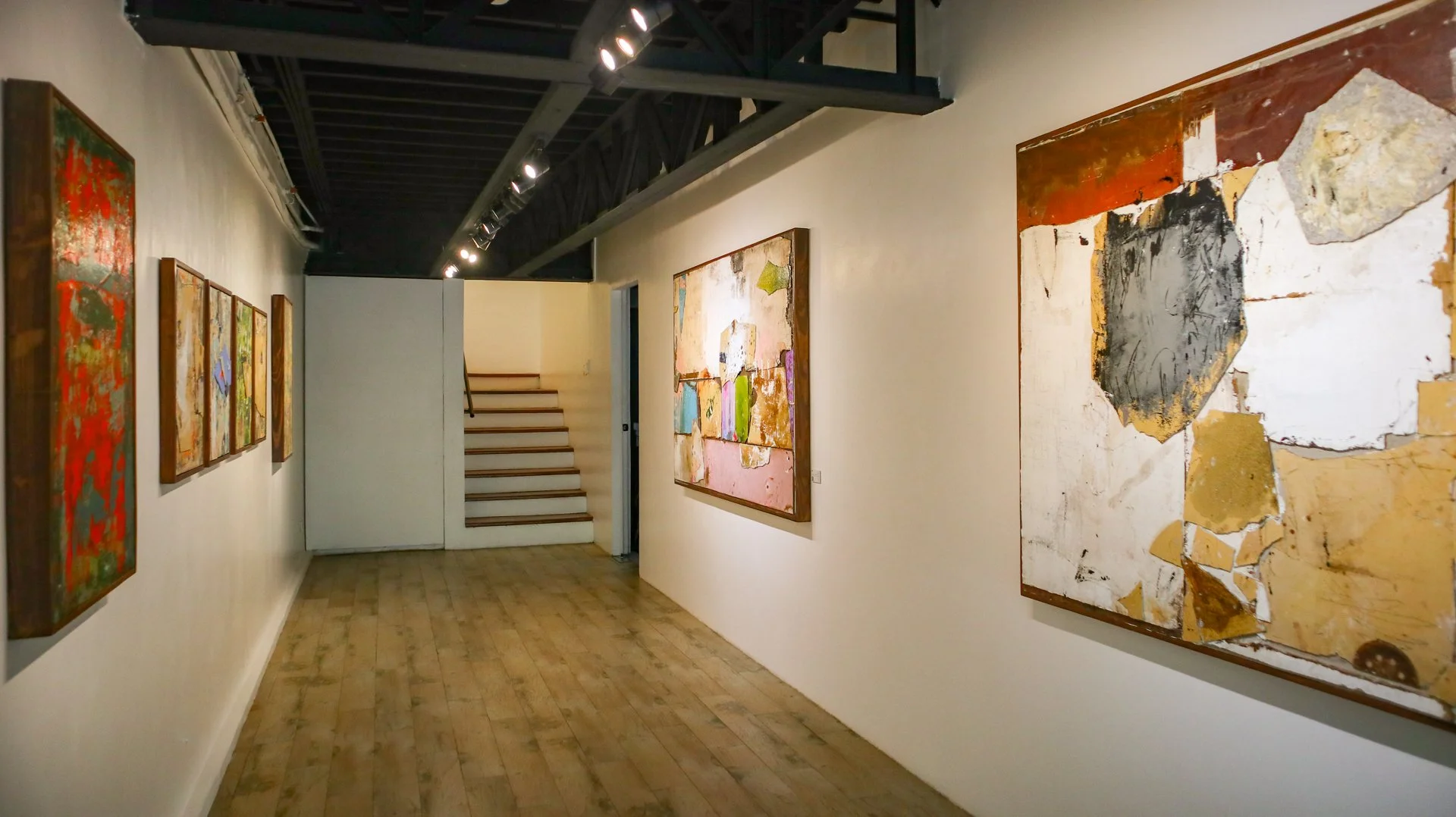
This body of work emerged from the debris of my home studio in Cebu following the devastation caused by Typhoon Tino (international name: Kalmaegi) in early November 2025. Torrential rains brought severe flooding that submerged the studio interior and damaged sections of the building’s structure. In the days that followed, fragments of the studio were salvaged from the site: broken cement fiber boards, deteriorated wooden ceiling panels, rusted galvanized iron sheets, and splintered timber once embedded within the domestic architecture. These materials, initially gathered as refuse awaiting removal, became the material foundation for the works presented in this exhibition.
Immediately after the floodwaters receded, the debris was stacked outside the studio in anticipation of municipal collection. Yet the scale of destruction across the city delayed waste removal, leaving the fragments exposed to weeks of alternating heat and rain. Surfaces began to warp, rust, and fracture further. What remained was not simply construction waste but a layered archive of environmental stress, carrying visible marks of weather, time, and structural fatigue.
The damaged house from which these fragments originated carries a longer architectural history. The bungalow, built in the 1970s and inherited from my parents, belongs to a generation of modest residential structures common in many Philippine coastal cities. Designed for ventilation and seasonal storms yet continually vulnerable to extreme weather events, such houses often embody what might be called an architecture of ongoing repair. Roof leaks from recurring typhoons, cracks from seismic activity, and improvised structural adjustments are not exceptional occurrences but part of the lived rhythm of habitation. In the Philippine archipelago, situated along the Pacific typhoon belt and the seismically active “Ring of Fire”, domestic architecture often becomes a material witness to cycles of disruption and reconstruction.
Within this context, the fragments salvaged from the studio operate not merely as debris but as carriers of disaster memory. Anthropologist Greg Bankoff has described how communities in the Philippines have historically developed a form of “cultures of disaster,” in which environmental catastrophes become embedded in everyday life and spatial memory (Bankoff, 2003). The damaged materials from the studio embody precisely such conditions: they are remnants of lived space marked by recurring encounters with environmental instability.
The technical process guiding these works draws partly from the architectural principle of adaptive reuse, a practice that encourages the repurposing of existing structures for new functions while preserving their material character and historical traces. In this series, however, the logic of reuse shifts from architectural preservation toward artistic transformation. Salvaged building components become unconventional painting supports, allowing the remnants of destruction to operate as grounds for a renewed visual language.
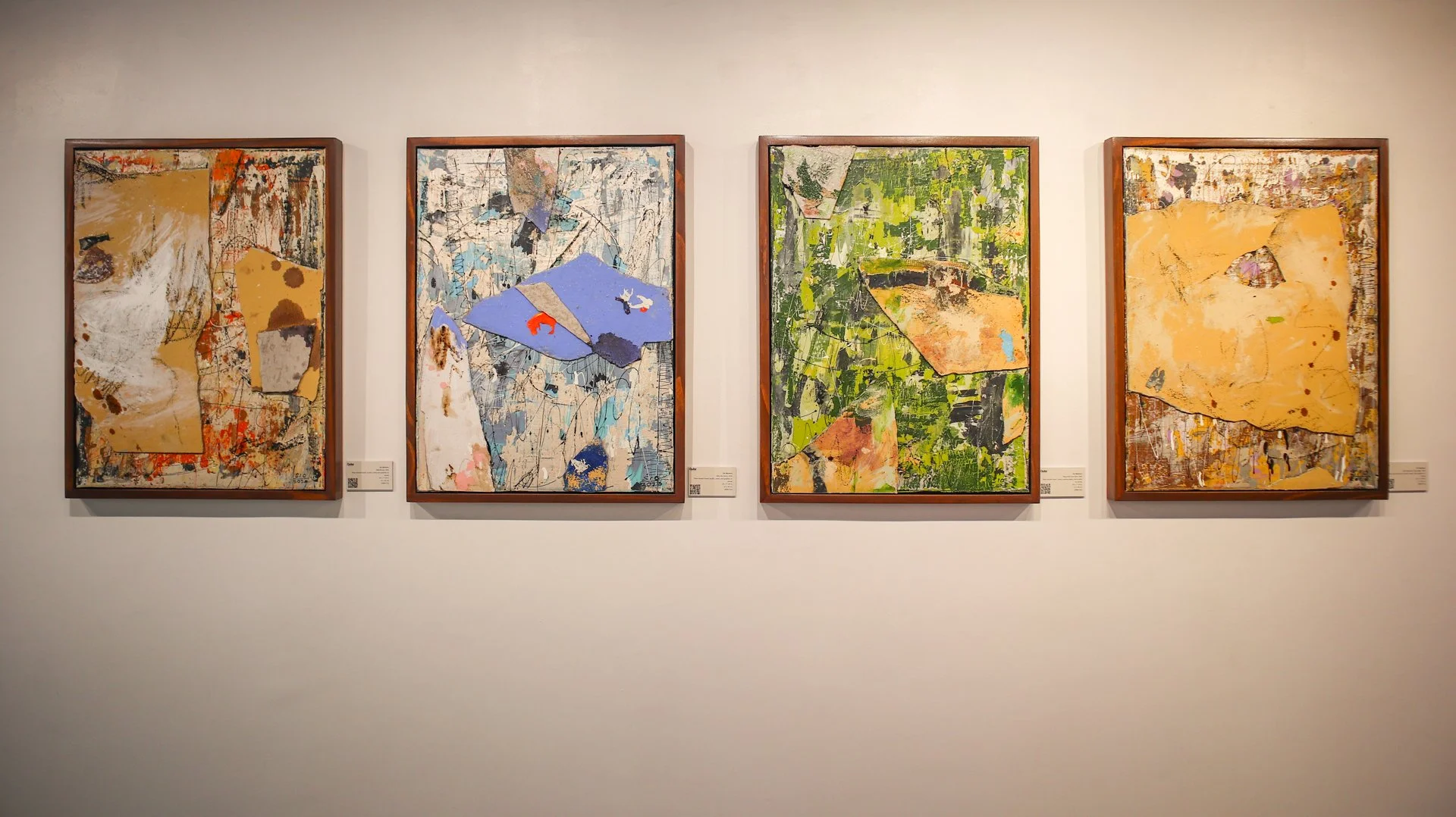
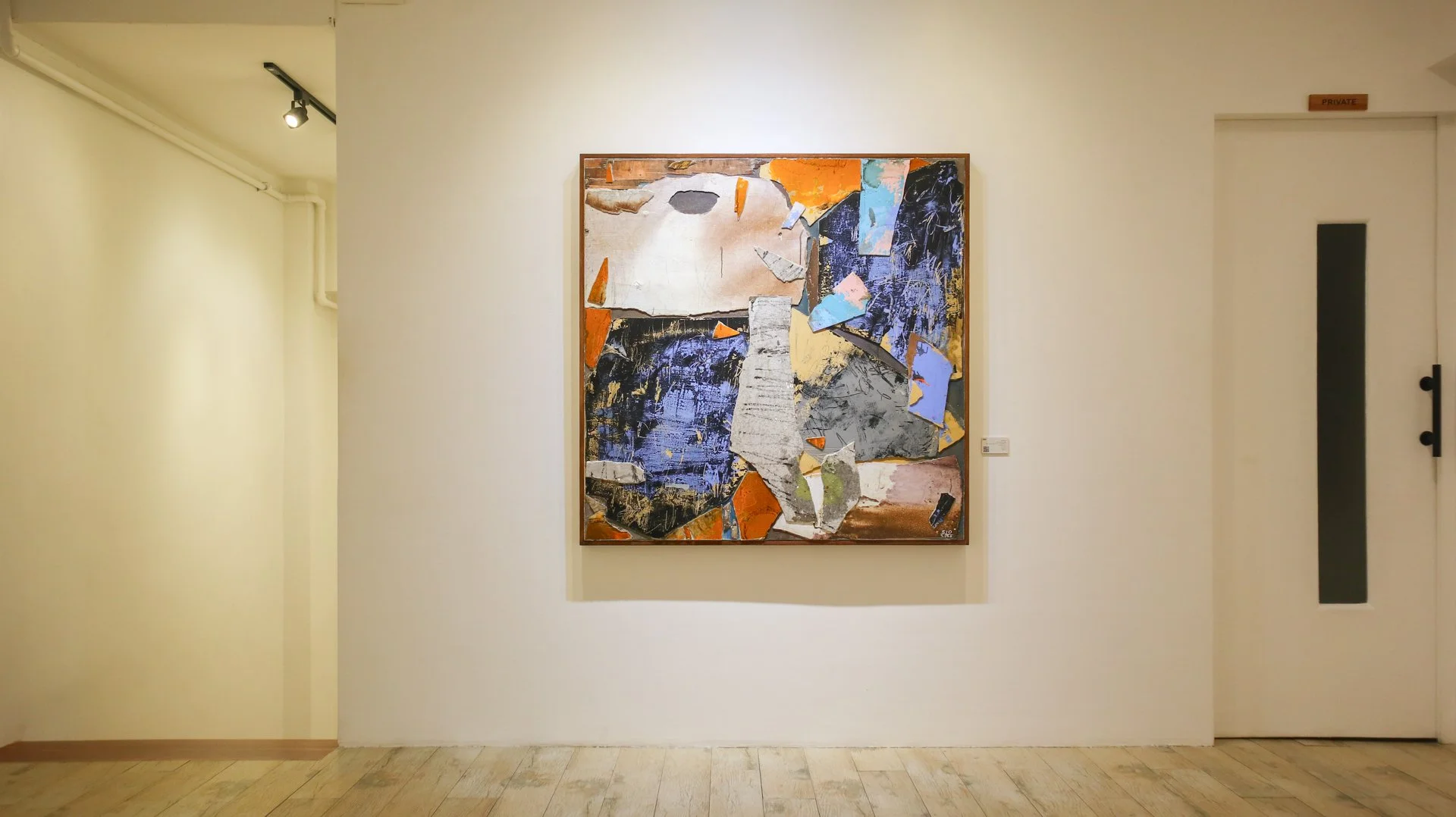
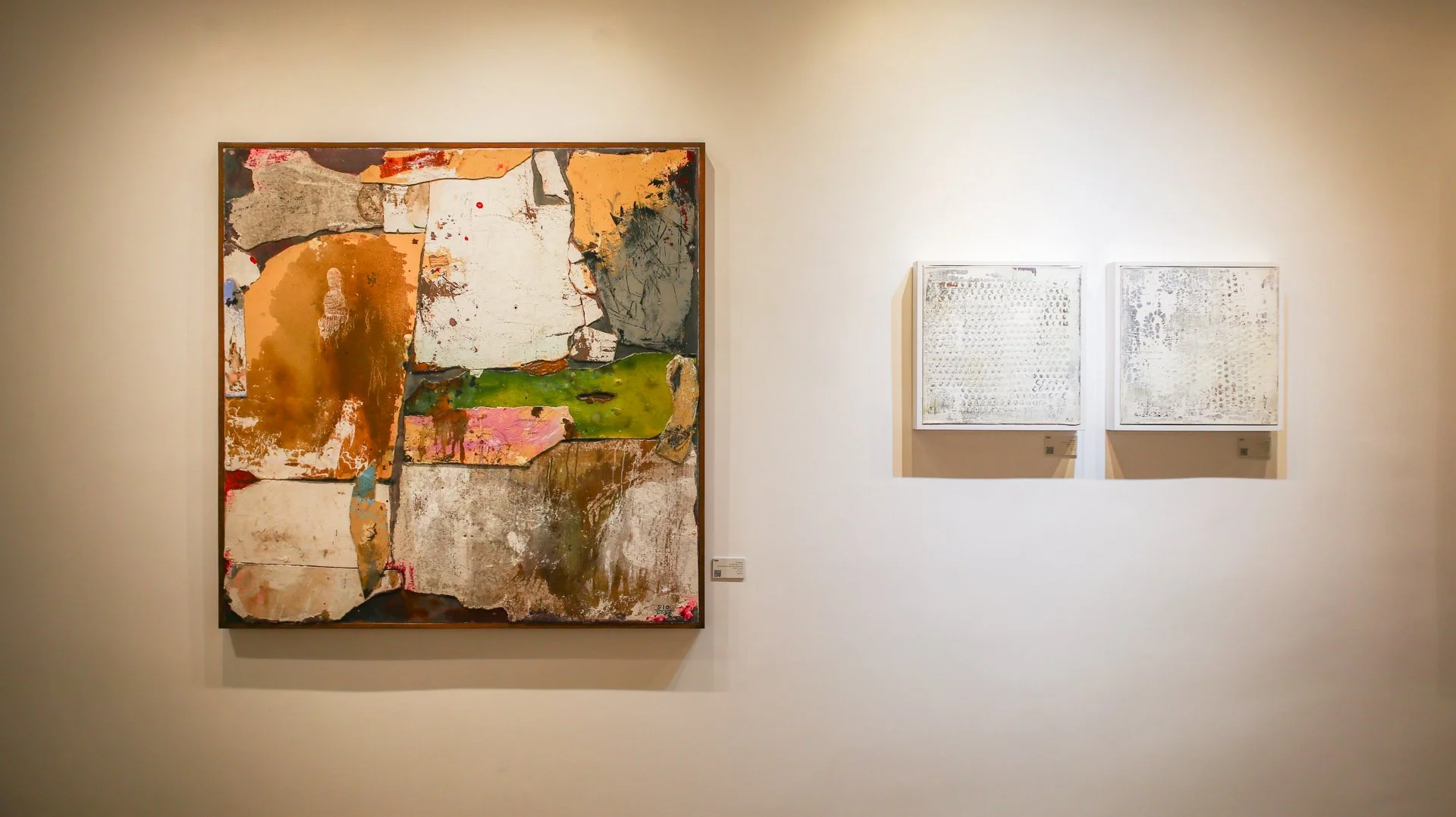
The fragments were prepared and reassembled into composite structures that function simultaneously as surface and object. Each shard acts as an unpremeditated element within a larger compositional field. Industrial bonding agents and fiber-cement screws secure the pieces together, while successive layers of paint integrate the fragments visually. The final surface is sealed with automotive-grade varnish to stabilize the materials while preserving their weathered textures.
This process also marks a departure from the purely painterly abstraction that has characterized much of my previous work. Instead, the series moves toward non-figurative assemblage, where painting intersects with construction and material salvage. Rosalind Krauss has noted that assemblage practices challenge the conventional autonomy of the pictorial surface by introducing objects whose physical histories disrupt the illusionistic space of painting (Krauss, 1979). In these works, the salvaged architectural fragments retain their material specificity even as they participate in abstract composition.
The exhibition also engages conceptually with the architectural theory of spatial discontinuity. Rather than prioritizing seamless continuity, spatial discontinuity foregrounds rupture, fragmentation, and the generative role of gaps within spatial systems. Bernard Tschumi has argued that architecture is fundamentally shaped by tensions between space, movement, and event, suggesting that discontinuities can produce new forms of spatial perception (Tschumi, 1996). Similarly, Peter Eisenman’s architectural investigations emphasize fragmentation as a strategy that destabilizes conventional spatial order, creating structures that resist unified interpretation (Eisenman, 1999). Anthony Vidler has further described how fractured architectural forms reflect broader cultural conditions in which modern space often manifests feelings of uncertainty and anxiety (Vidler, 2000).
Within the works in this exhibition, these theoretical concerns appear in material form. The seams between fragments remain visible; irregular edges, cracks, and voids interrupt the surface. Rather than concealing these breaks, the compositions allow discontinuity to become an organizing principle. The viewer’s gaze moves across uneven planes, encountering transitions between paint, raw material, and structural seams. The result is a spatial field that sway between painting and object.
Assemblage practices have long engaged with such disruptions of visual unity. Brian O’Doherty has observed that the introduction of real materials into art collapses the boundary between pictorial space and the physical world, destabilizing the traditional neutrality of the gallery surface (O’Doherty, 1986). Nicolas Bourriaud later described contemporary artistic practices involving found materials as forms of “postproduction,” in which existing cultural objects are reorganized into new relational systems (Bourriaud, 2002). In this sense, the salvaged architectural fragments operate both as remnants of a specific disaster event and as elements within a broader language of contemporary assemblage.
Through this process, materials once associated with destruction are repositioned within new aesthetic relationships. The fragments do not attempt to erase their prior identities; rust, cracks, and weathered textures remain visible within the compositions. Instead, the works acknowledge rupture as an intrinsic part of form.
Ultimately, this exhibition reflects an attempt to transform the physical consequences of environmental catastrophe into a visual language of persistence. In a country where architecture often bears the marks of repeated natural disturbances, reconstruction becomes not merely a technical necessity but a cultural condition. The assemblages presented here embody that condition: fragments of damaged space reorganized into renewed structures of perception.
In these works, discontinuity is not simply evidence of loss but a generative force. Debris becomes surface, rupture becomes structure, and the scars of disaster become sites through which new aesthetic possibilities emerge.
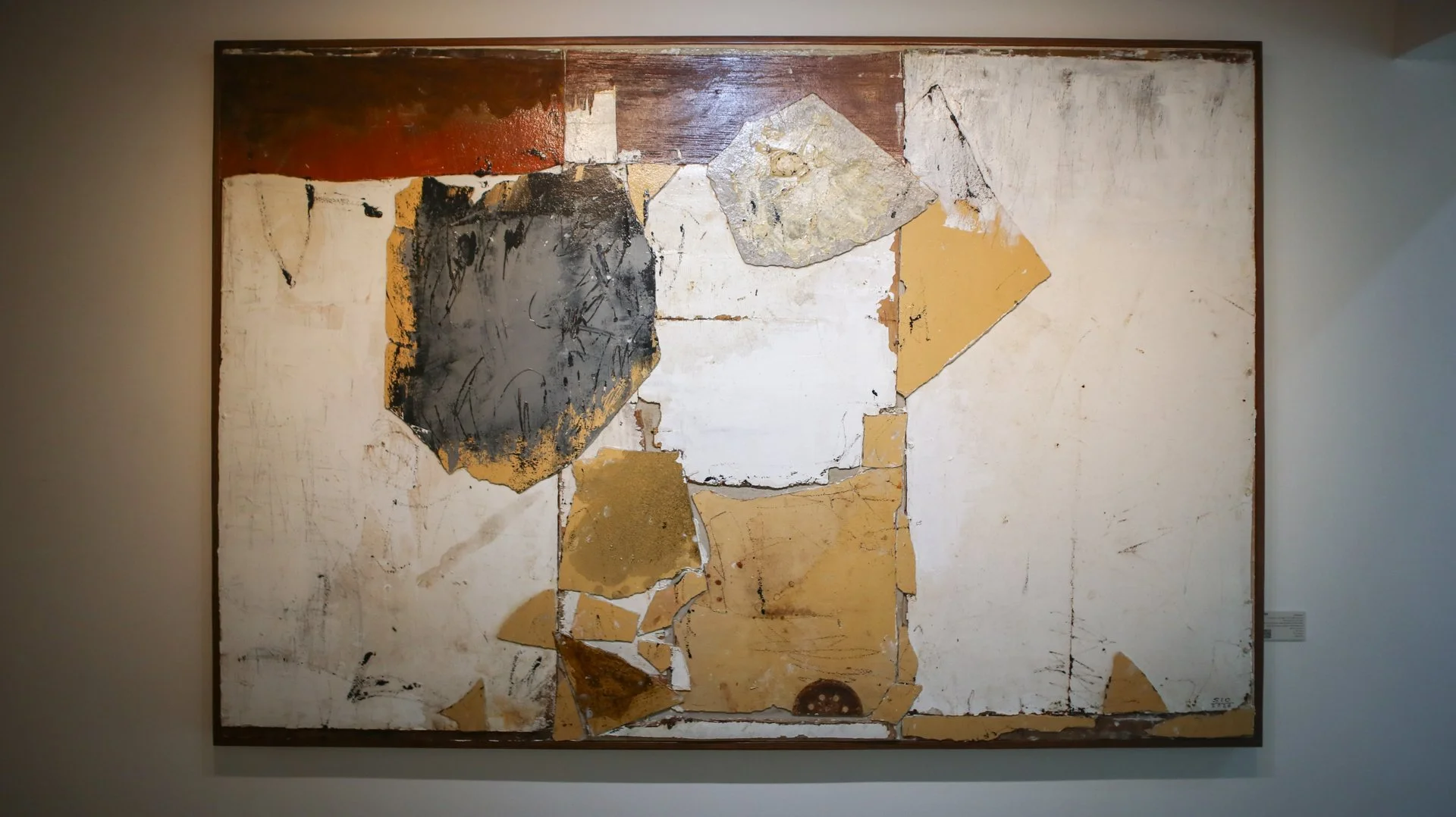
Eventually You Will Have to Pick Up the Pieces and Reconfigure Your Life, 2026
CURATORIAL STATEMENT
Resilience has acquired a questionable reputation. It is often invoked by those who refuse a rigorous engagement with the structural conditions that produce suffering. Politicians and their unthinking allies have cheapened the term, framing it as a virtue of endurance—an ability to “take it” without complaint. In this sense, resilience becomes a quiet acceptance of injustice, a willingness to ignore, or worse, normalize the systems that perpetuate harm. It is made to function as a dignified silence.
This exhibition unsettles that definition. In Sio Montera’s works, resilience is not submission but refusal: a refusal to be erased, diminished, or discarded. Catastrophe provides the ground, but the aftermath is where something else emerges—forms that insist on presence, memory, and resistance.
The year 2025 proved devastating for Cebu. A series of earthquakes was followed by a massive typhoon that displaced communities and reduced structures to debris. These events were not merely natural disasters but were exacerbated by the entanglement of the climate emergency and systemic political failure. Corruption, neglect, and inadequate governance have long shaped the conditions under which such destruction unfolds. In their wake, what remains is not only ruin, but a population repeatedly asked to be “resilient.”
To read resilience as passive endurance is to misunderstand its potential. In Montera’s practice, resilience is the act of making sense of ruin while still within it. There is no safe distance, no detached vantage point. Instead, there is proximity—an embodied engagement with debris, fracture, and instability. Resilience here is not comfort; it is companionship with the wreckage.
The materials in this exhibition bear this out. Fragments of cement, splintered wood, and other salvaged remnants are not concealed or beautified into seamless forms. Cracks and fissures remain visible, functioning not as flaws to be erased but as textures that carry meaning. These fault lines recall the processes that shaped them—forces of rupture that cannot and should not be smoothed over. Montera’s works do not repair in order to forget; they reconfigure in order to remember.
This approach aligns with what the artist describes as “spatial discontinuity”—a foregrounding of rupture, fragmentation, and gaps as both aesthetic and conceptual conditions. The works resist coherence. They interrupt. They refuse the illusion of stability that often accompanies narratives of recovery. Instead, they present assemblages that hold together tension, disruption, and unresolved histories.
Within this framework, resilience is redefined. It is not the quiet endurance of hardship but an active interruption of “business as usual.” It exposes weakened structures, insists on visibility, and calls attention to the conditions that produce recurring crises. Rather than offering solace through polished surfaces, these works demand confrontation. They ask the viewer to pause, to reckon, and to recognize the persistence of systemic failure.
The Philippines offers a particularly fraught linguistic terrain for this discussion. Words shift, often under the weight of political violence. Consider the term “salvaging,” which in local parlance has come to mean extrajudicial killing—the disposal of bodies. It is a cruel inversion, one that reveals how language can be distorted to mask brutality.
Montera reclaims this term. In these works, salvaging returns to its original sense: to save, to recover, to preserve. The act of gathering debris becomes a deliberate intervention, transforming discarded materials into carriers of memory and critique. Salvaging, in this context, is not erasure but insistence—a refusal to let ruin disappear without a trace.
A chipped block of cement, once part of a structure, acquires new resonance when placed within this field of meaning. It becomes more than a fragment; it becomes a statement. Context, composition, and material history converge to produce a form of visual rhetoric that is both grounded and political.
These works do not offer resolution. They complicate. They resist the desire for closure that often accompanies narratives of recovery and resilience. Instead, they propose that ruin itself has an afterlife—one that persists in material, memory, and form. Resilience, then, is not about overcoming ruin but about engaging its continuities.
As Montera suggests, these are not works of seamless integration but of irruption—interruptions marked by sharp, uneasy breaths. They register the difficulty of navigating distress, the instability of the present, and the uncertainty of what comes next. In doing so, they pose a question to the community: Will we learn from these ruins, or will we remain suspended in cycles of neglect and disaster?
Resilience is not a passive virtue. It is a critical practice. It is the capacity to confront, to remember, and to refuse the conditions that make ruin inevitable.
Resilience is the afterlives of ruin.
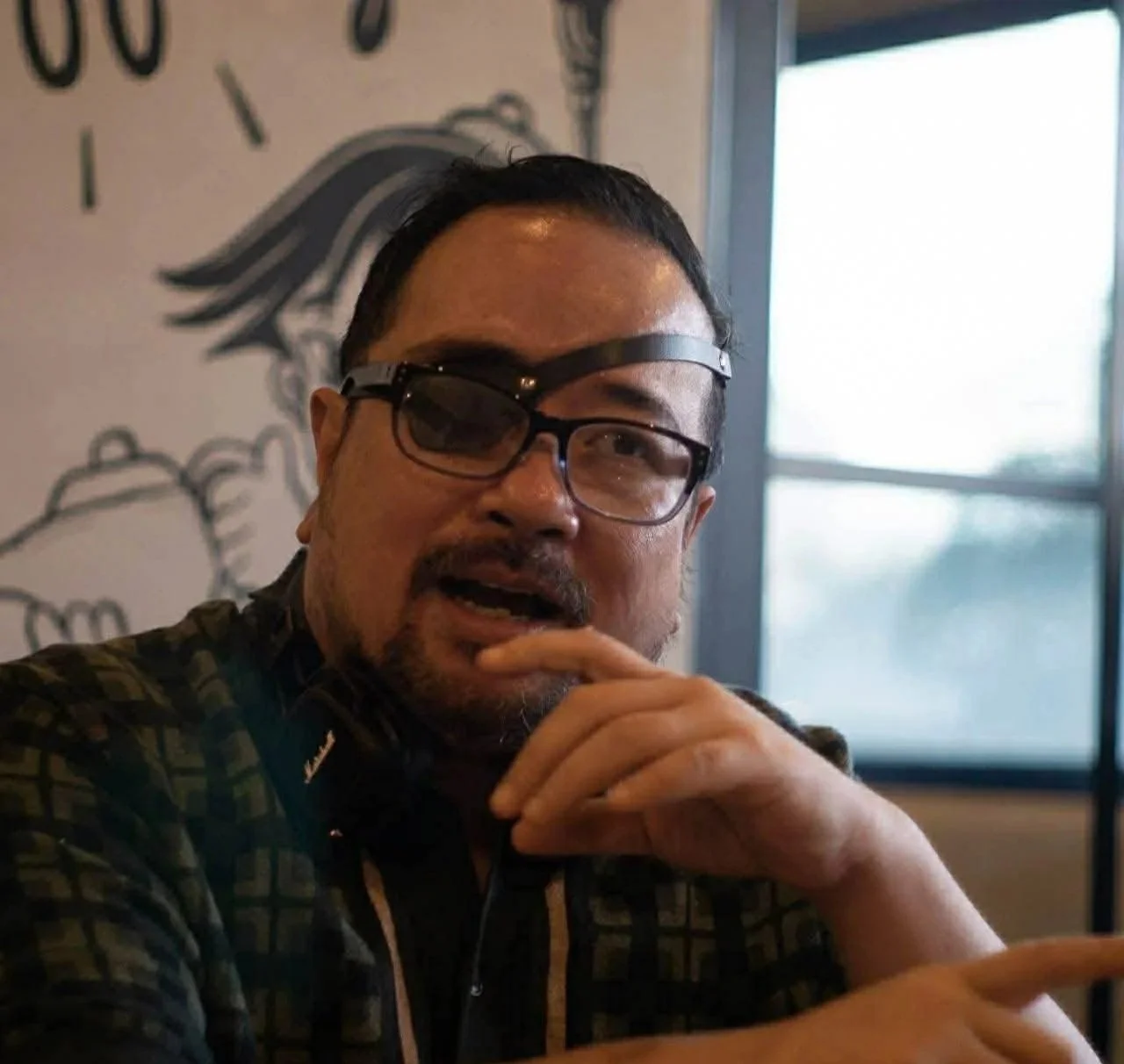
About the curator
Jose Santos P. Ardivilla is an Assistant Professor at the University of the Philippines Diliman (UPD) College of Fine Arts. He earned a PhD in Fine Arts with a focus on Critical Studies and Artistic Practice from Texas Tech University as a Fulbright-CHED scholar. He is a political cartoonist, printmaker, and writer.
Selected Works
-
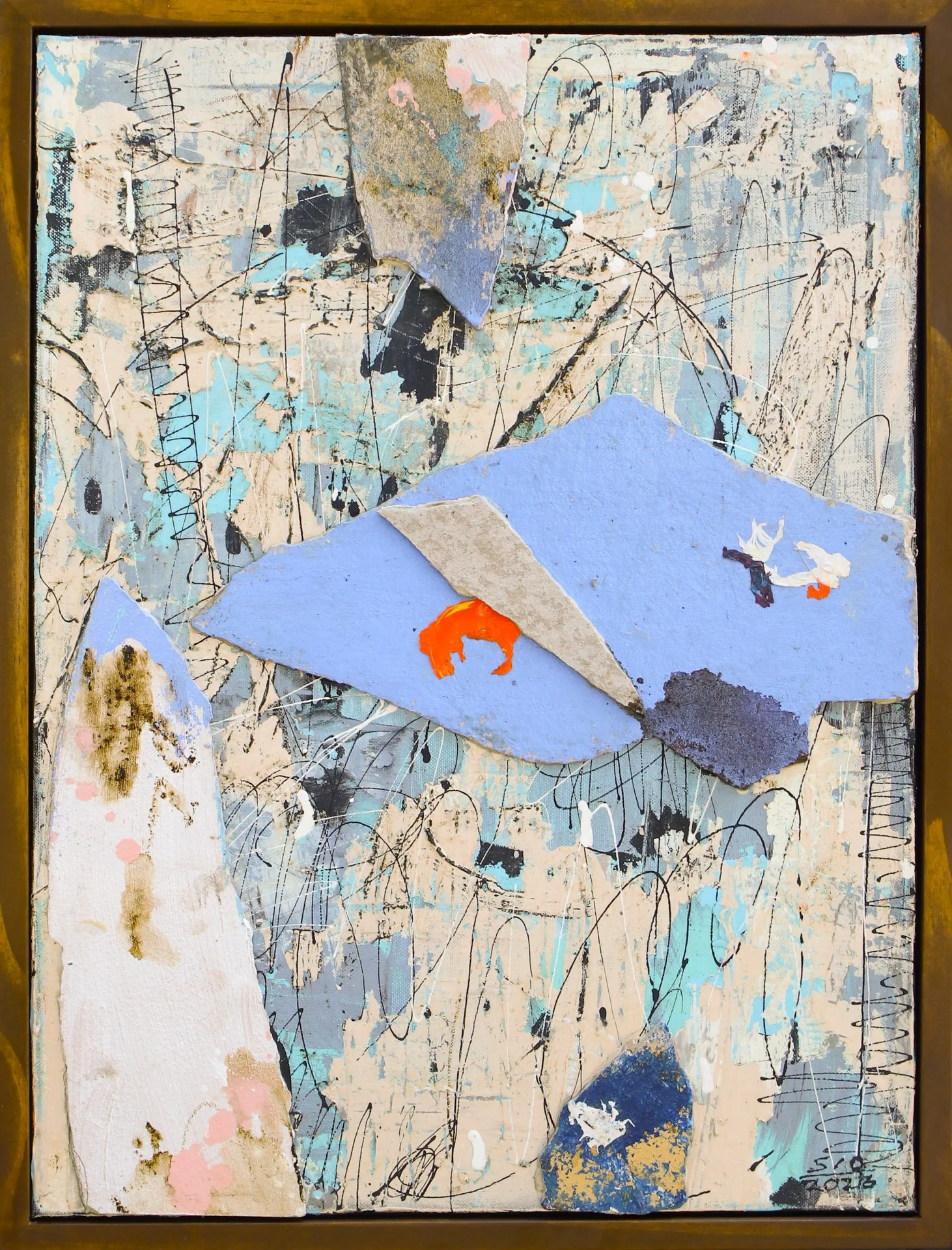
Sio Montera After the Storm, 2026
-
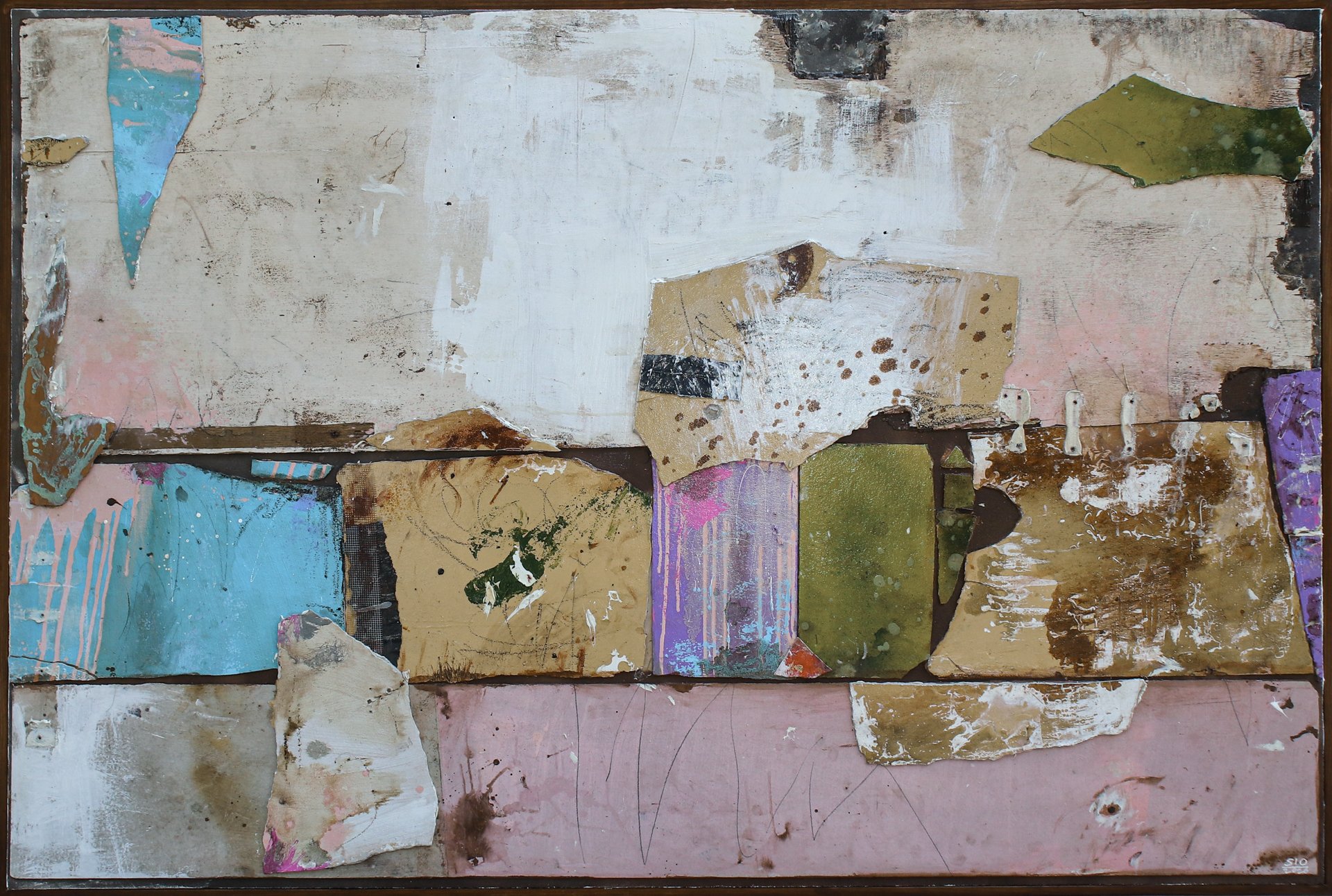
Sio Montera Fractured Ground, 2026
-
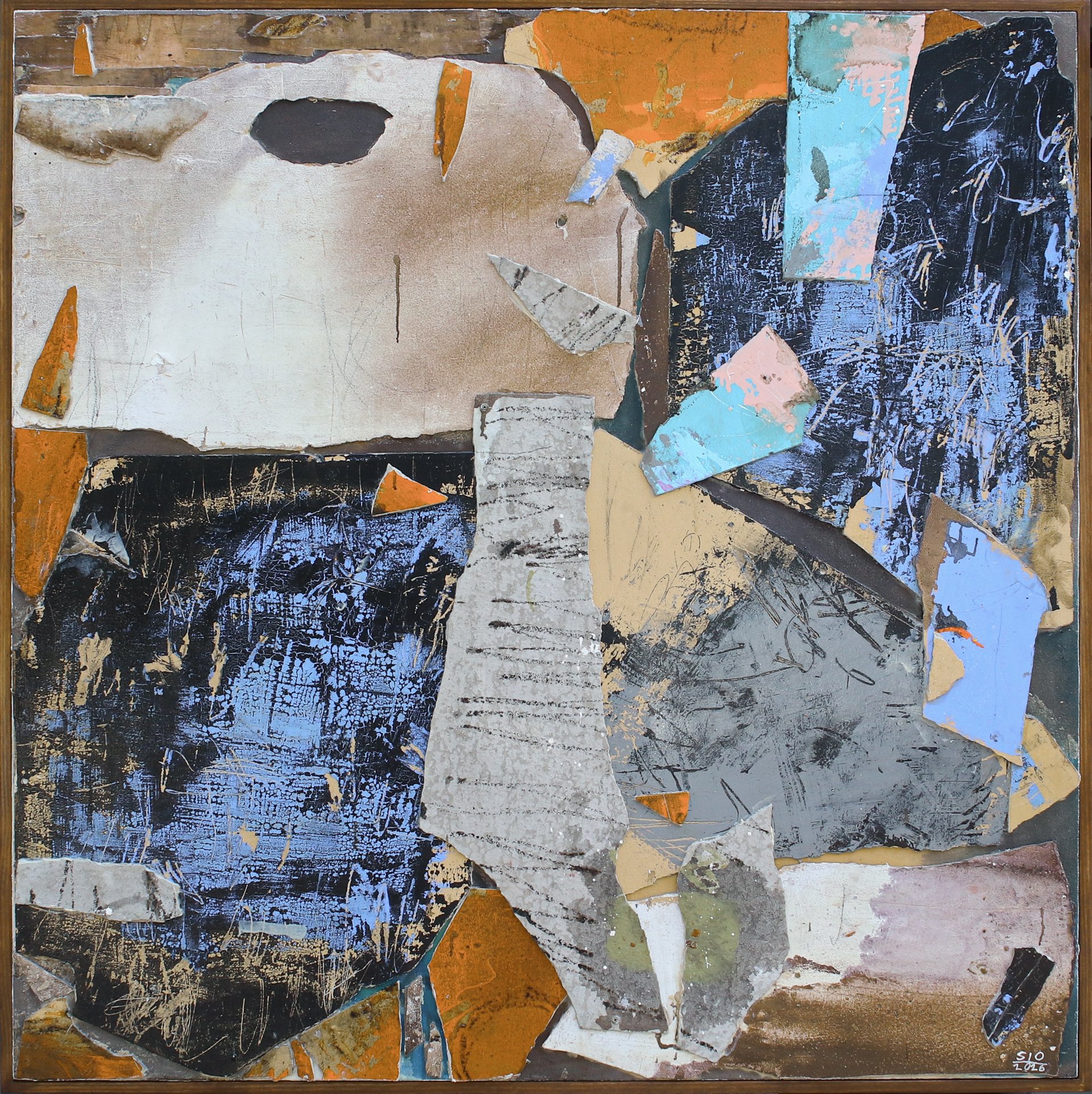
Sio Montera Spatial Discontinuity, 2026
-
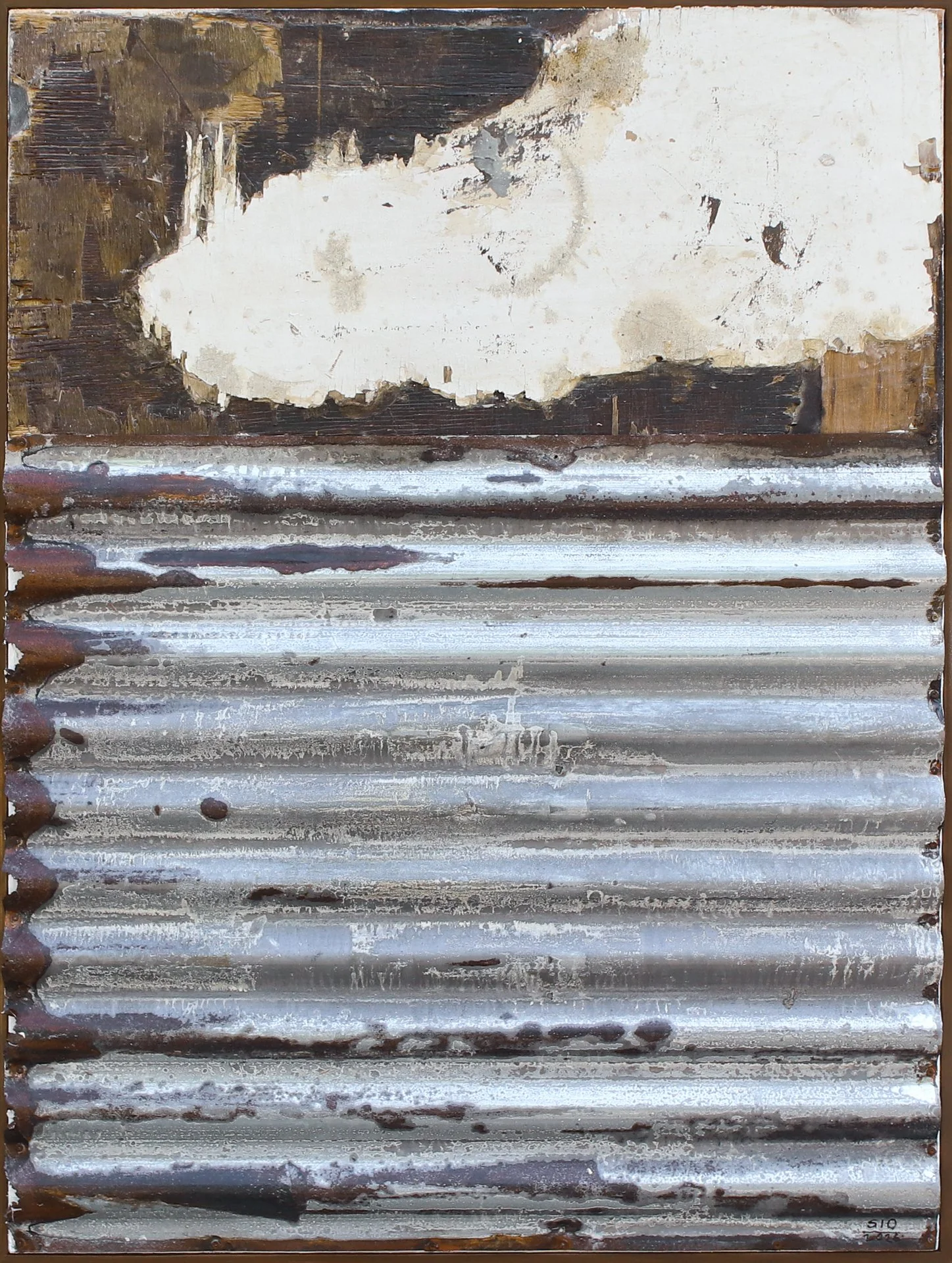
Sio Montera Weathered Span No .I, 2026
-
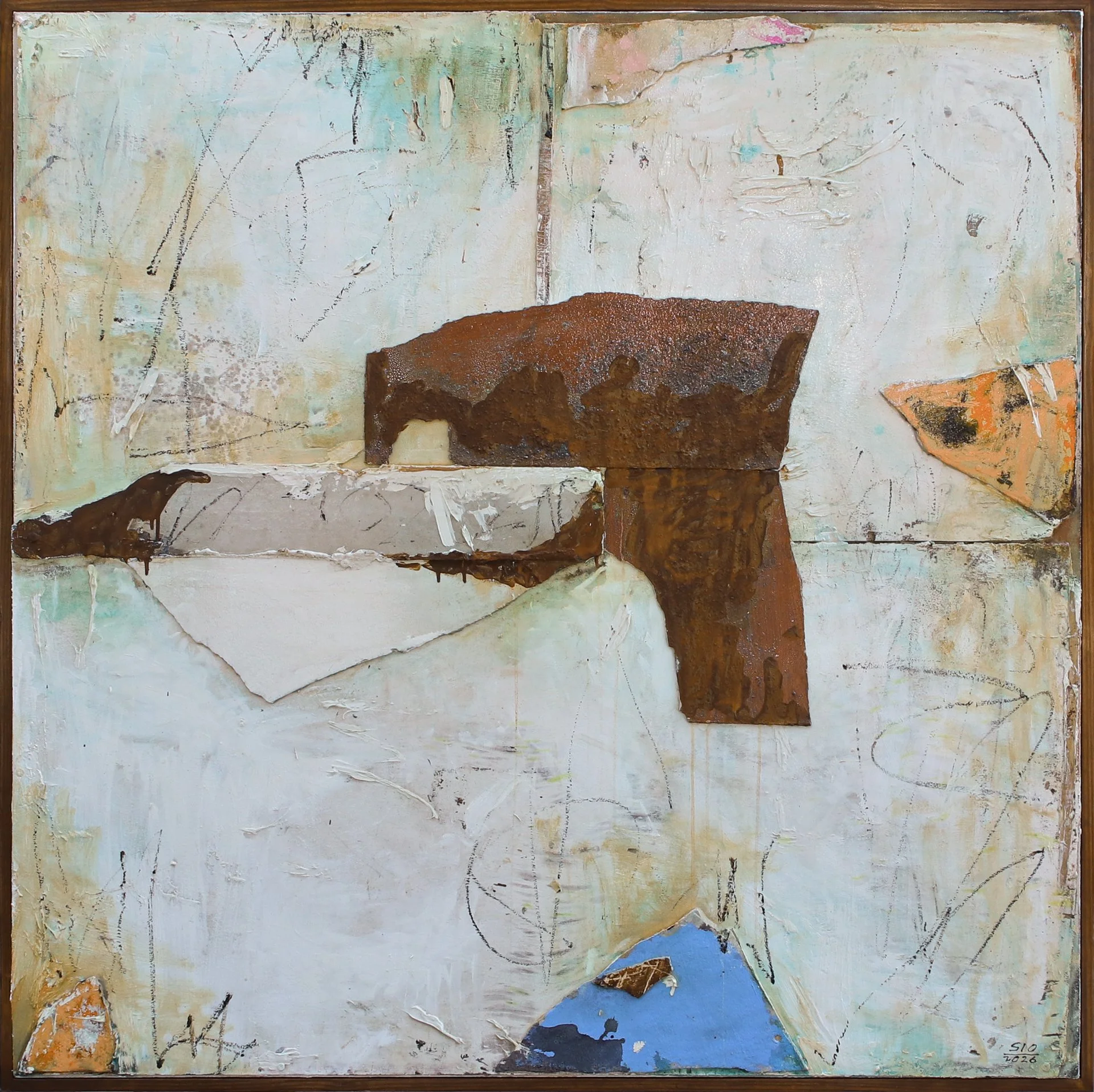
Sio Montera Load-Bearing Silence, 2026
-
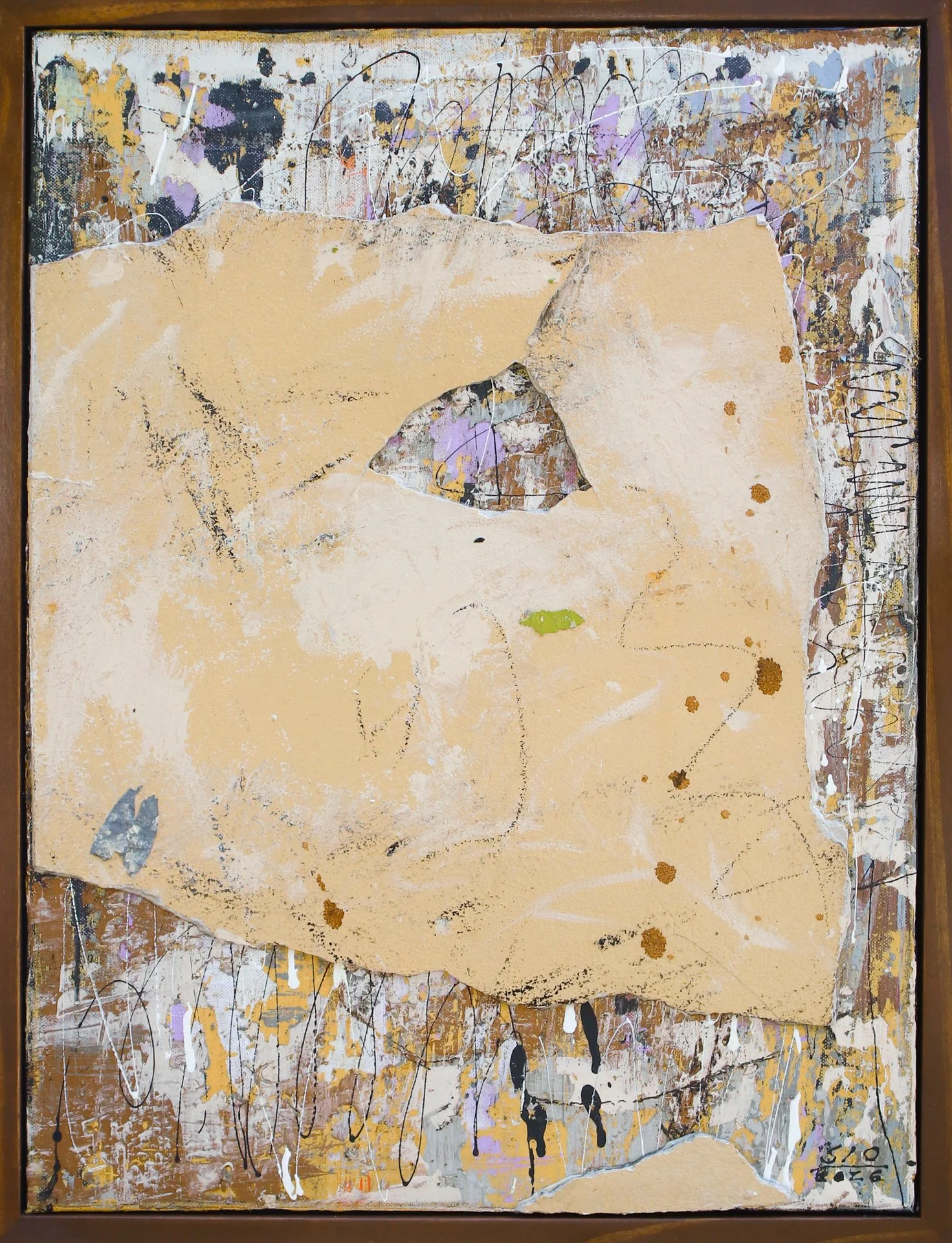
Sio Montera Sky Fragment, Grounded , 2026